

Batch Off Cooling Line Factory Solutions for High-Efficiency Rubber Processing
2026-11-02
Every rubber processor knows the hidden cost of an inefficient cooling stage: inconsistent batch temperatures, longer cycle times, and compromised product quality. The batch off cooling line is more than a conveyor—it's the heartbeat of high-efficiency rubber processing. AUGU AUTOMATION engineers factory solutions that turn this often-overlooked step into a precision-driven advantage. So what actually makes a cooling line truly high-efficiency? Read on to find out.
Cooling That Keeps Rubber Compounds Stable
The moment rubber exits the mill or internal mixer, its temperature can easily climb past 160°C. Left unchecked, that heat accelerates scorch, breaks down polymer chains, and ruins batch-to-batch consistency. A well-designed cooling line doesn't just lower temperature—it locks in the compound's physical properties before they have a chance to drift.
Dip tanks and batch-off systems work, but they're not created equal. Air-cooled batch-offs suit softer stocks, while water-cooled conveyors pull heat out faster for high-viscosity compounds. The trick is matching cooling rate to the compound's cure system. Too fast and you risk blooming or surface imperfections; too slow and the stock sits in the danger zone where premature crosslinking begins.
What often gets overlooked is the post-cooling stage. Stacking warm slabs or strips traps residual heat, leading to hot spots that can ruin an entire pallet. Forced-air racks, temperature sensors at multiple points, and automatic diverters for overheated sections make the difference between stable rubber and a costly rework. The goal isn't just a cooler surface—it's uniform temperature through the whole cross-section.
Modular Batch-Off Lines Built Around Your Floor Plan
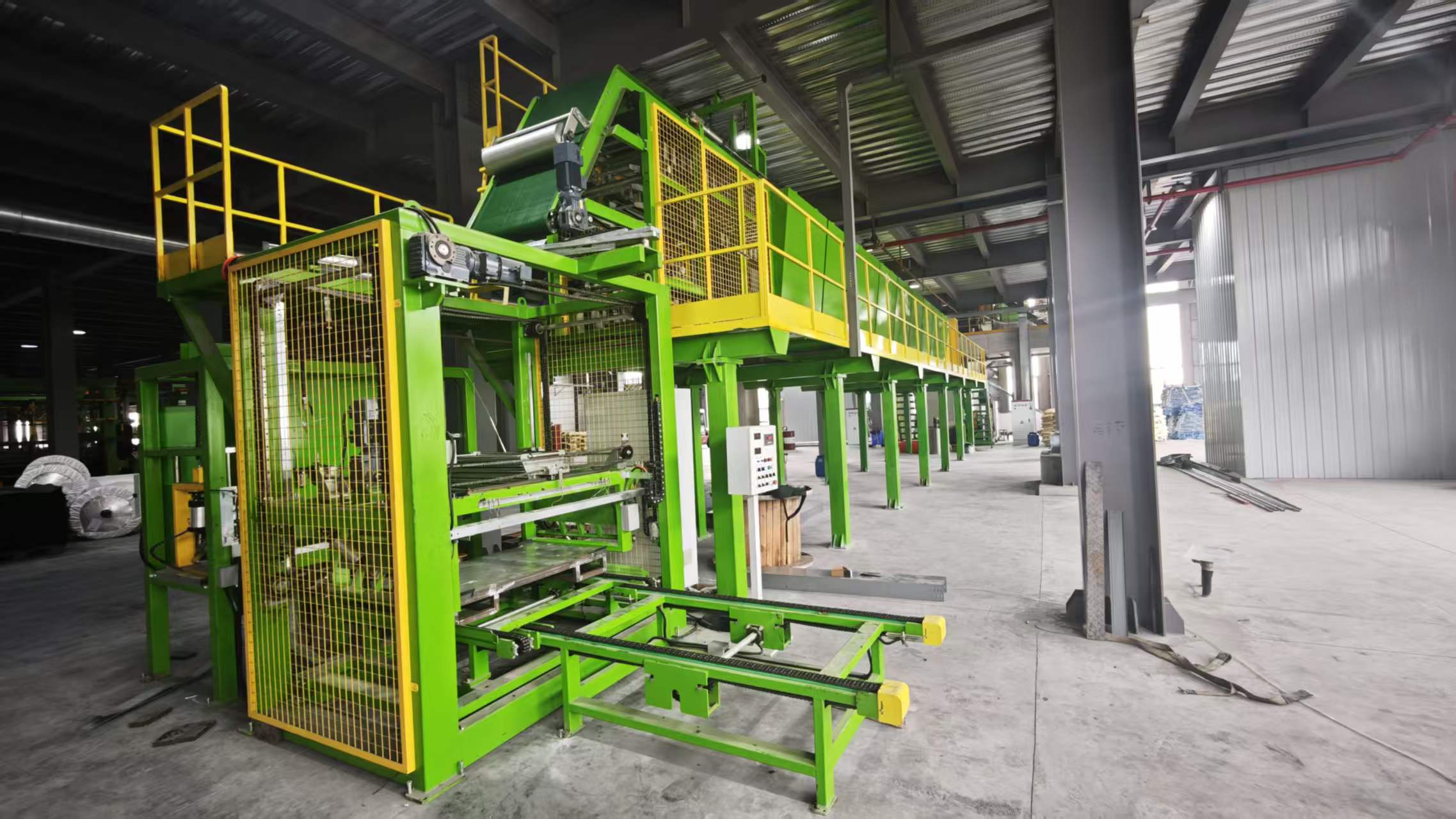
Most batch-off lines force you to adapt your floor plan to the machine. Ours works the other way around. Every module—from the spray section to the cooling conveyor to the take-away stacker—is configured to fit the exact dimensions and traffic flow of your existing plant.
Because components arrive pre-wired and pre-piped, installation rarely interrupts production for more than a few days. You can also add or reposition modules later without ripping out concrete or reworking ductwork. A line that starts as a straight run today can become an L-shaped or split-level layout next year.
We start with a laser scan or a simple AutoCAD file of your bay, then map out the shortest material path and the safest operator access. The result is a system that doesn't just fit your floor plan—it actually uses the corners, columns, and overhead clearances that other suppliers call obstacles.
Reclaim Heat From Every Cooling Cycle
Most cooling systems treat waste heat as a nuisance, venting it outdoors while burning extra energy to do so. That rejected thermal energy, however, still holds practical value. By placing a heat exchanger on the discharge side of a chiller or refrigeration loop, you can capture warmth that would otherwise be lost and redirect it toward preheating domestic water, warming a storage tank, or even supporting low-temperature space heating. The key is to match the grade of recovered heat with a legitimate on-site demand, so the system runs without forcing artificial loads.
A common retrofit involves a desuperheater installed between the compressor and condenser. Instead of rejecting all the high-temperature refrigerant gas heat to the ambient air or cooling tower, the desuperheater transfers a portion into a water loop. This can offset 10–20% of a building’s hot water energy use in restaurants, laundries, or apartment complexes where cooling and hot water demands overlap daily. The circuit needs proper controls — a tempering valve, a small circulator pump, and a thermal store sized for peak recovery, not peak demand.
Field experience shows the best results come from keeping the recovery circuit short and simple. Extra tanks, long pipe runs, or oversized exchangers add parasitic losses that eat into the savings. Monitoring inlet and outlet temperatures on both sides for a few weeks reveals whether the heat is actually being used or merely dissipated elsewhere. When the recovered heat serves a real, year-round load, the cooling equipment runs more efficiently too, because it no longer works against a fully wasted heat sink.
Stacking and Palletizing Without Manual Handling
Replacing manual palletizing starts with removing the operator from the end-of-line bottleneck. Instead of a person lifting cases, turning them into interlocking layers, and sliding full pallets away, an automated cell takes over the entire sequence. A robot or gantry picks each carton from the infeed conveyor, rotates it according to the programmed layer pattern, and places it with consistent edge alignment. Pallet dispensers feed empty pallets, while slip sheet and tier sheet dispensers handle separation between layers without anyone bending or reaching.
For operations that ship mixed cases or multiple product sizes, the system adjusts on the fly. Vision sensors or barcode readers identify each incoming carton, and the palletizing software selects the best placement from a library of pre-approved patterns. This avoids crushed boxes, unstable stacks, and wasted pallet space. The finished loads are then discharged on a floor-level conveyor or shuttle car, ready for stretch wrapping and outbound staging without a forklift operator having to reposition them mid-line.
Cleaner Air, Lower Dust, Safer Workflows
Breathing easier on the job starts long before the shift ends. Airborne particles don't just settle on surfaces—they creep into equipment, coat ventilation grilles, and linger at head height, turning routine tasks into a slow grind against your lungs. The difference between a marginal setup and a genuinely clean environment isn't one big fix; it's a chain of small, deliberate choices: exhaust placement that respects the actual flow of movement, filtration sized for the dust you can't see, and housekeeping rhythms that match real production hours instead of an abstract checklist.
Dust, once it finds a static corner, becomes a second workload. You sweep it, vacuum it, or ignore it until a machine hiccups. But when capture happens at the source—right at the point where cutting, sanding, or transfer throws fines into the air—less of it ever reaches the floor, the racks, or the breakroom. That translates into fewer stops for cleanup, fewer filter swaps that eat into a morning, and less time spent chasing a haze that never quite clears.
Safer workflows aren't built on warnings alone. They emerge when the air itself stops being a variable people have to manage by instinct. Operators who can see their workspace clearly, who don't taste metal or wood fines halfway through a cycle, make faster decisions and fewer mistakes. The real marker of progress isn't a poster or a policy; it's the moment someone notices the air feels different and realizes they haven't coughed all afternoon.
Thermal Profiling That Flags Inconsistencies Early
Thermal profiling in manufacturing often waits until a finished batch shows scattered failures, but that approach misses the subtle heat signature shifts that appear long before a defect becomes visible. By tracking temperature curves across multiple production runs, engineers can spot a drifting zone or a slow ramp-up trend that signals an upcoming problem — not after scrap piles up, but when the inconsistency is still small enough to correct with a minor adjustment.
The real value lies in comparing live thermal data against a baseline that adapts to normal process variation, not a rigid template. When a new material lot or a slightly worn nozzle begins to alter the heat pattern, the system flags that deviation immediately, giving operators a chance to inspect the tool or tweak the parameters while the line is still running. This proactive view turns thermal profiling from a quality-check afterthought into a real-time guardrail.
Teams that adopt this early-flagging mindset often report fewer unexpected shutdowns and a tighter spread in final product performance, because they are no longer reacting to obvious failures but instead tuning the process based on the earliest whisper of thermal change.
FAQ
It receives hot rubber sheets or strips from a mill or extruder, cools them down through a series of conveyors and fans, and then applies an anti-tack dip before stacking them for storage. This prevents sticking and stabilizes the rubber for downstream mixing or molding.
By using controlled airflow, adjustable conveyor speed, and precise temperature zones, the line cools rubber faster and more uniformly. This cuts waiting time, reduces scorch risk, and allows the downstream process to run at a steady pace without manual intervention.
Look for heavy-duty stainless steel frames, modular conveyor sections, variable-frequency drives, automatic dip tanks, and integrated stacking systems. These features reduce downtime, simplify cleaning, and let the line adapt to different rubber compounds and batch sizes.
Yes, a flexible line can alternate between natural rubber, SBR, EPDM, nitrile, and other compounds. The key is adjustable dip concentration, temperature settings, and conveyor materials that resist sticking and corrosion across different rubber formulations.
Improper cooling often leads to surface tackiness, uneven moisture content, and scorched batches. A good system uses multi-stage fans, precise dwell time control, and anti-tack application to create a consistent surface film, so the rubber remains easy to handle and process.
Schedule weekly checks on fans, bearings, chains, and dip tank filters. Keep conveyor belts aligned and clean the cooling tunnels to prevent dust buildup. A line built with accessible panels and modular parts makes these tasks faster, which reduces planned downtime.
A dedicated provider engineers the entire line to work as one system—matching airflow, conveyor speed, dip application, and stacking logic. This avoids compatibility issues, speeds up installation, and gives you a single point of responsibility for training, spare parts, and upgrades.
Conclusion
Batch-off cooling lines are the quiet workhorses of rubber processing, keeping compounds stable by balancing temperature drop with controlled airflow. Instead of a one-size-fits-all tunnel, modular layouts adapt to your floor plan, whether it’s a straight run or a tight corner. Every cycle also becomes an opportunity to reclaim heat, feeding warm air back into other stages and trimming overall energy draw. What sets a true factory solution apart is the downstream integration: automatic stacking and palletizing eliminate manual handling after the cooling rack, while dust extraction and low-fume design keep the workspace safer and cleaner than older open-air methods.
The real payoff, though, is consistency. Sensors along the line track thermal profiles in real time, flagging uneven cooling or hot spots before they turn into batch rejects. This isn’t just about moving rubber from A to B; it’s about seeing the process clearly. Operators get early warnings instead of post-run surprises, and maintenance teams can trace drift back to a specific fan or damper. By combining heat recovery, modular engineering, and hands-free material flow with that kind of visibility, a batch-off line becomes more than a cooling step—it becomes a measurable part of high-efficiency rubber processing.
Contact Us
Contact Person: Lareina
Email: [email protected]
Tel/WhatsApp: +86 17561696737
Website: https://www.auguauto.com/