

Best Powder Storage Silo Systems for Safe and Efficient Material Handling
2026-11-16
What separates a powder storage silo that runs trouble-free for years from one that clogs, bridges, or turns into a dust hazard? It usually comes down to design choices that are easy to overlook—flow geometry, aeration, discharge aids, and explosion protection. The best powder storage silo systems for safe and efficient material handling share a few non-negotiable traits, whether you're storing cement, flour, fly ash, or specialty chemicals. This post examines what actually makes a silo system hold up on the plant floor, and how Fanchang Machinery applies those principles without the usual overpromising.
Why Powder Cohesion Matters More Than Silo Capacity
Most engineers obsess over silo volume, yet a powder that clumps or bridges can turn a 500-ton vessel into a 200-ton headache. Cohesion—the tendency of particles to stick together—dictates whether material flows freely or jams at the outlet. You might have ample height and diameter, but if the bulk solid develops cohesive strength from moisture, electrostatic charge, or fine particle interlocking, you'll face erratic discharge, rat-holing, and stagnant zones that refuse to empty.
Real-world failures often trace back to ignoring flow properties in favor of raw capacity. A cohesive powder can form a stable arch across the hopper opening, stopping discharge entirely even when the silo is 90% full. The fix isn't a bigger silo—it's addressing the root cause: reducing contact between particles through surface treatments, controlling moisture, or redesigning the hopper angle and outlet size to match the material's unconfined yield strength. Capacity only matters if the powder actually leaves the vessel.
Operators who focus on cohesion see fewer stoppages, less reliance on pneumatic hammers or vibrators, and more predictable batch times. Instead of asking "how much can we store?", the better question is "how reliably can we empty it?" A modest silo with excellent flow characteristics will outperform a massive one that demands constant intervention.
The Overlooked Role of Silo Wall Friction in Discharge Reliability
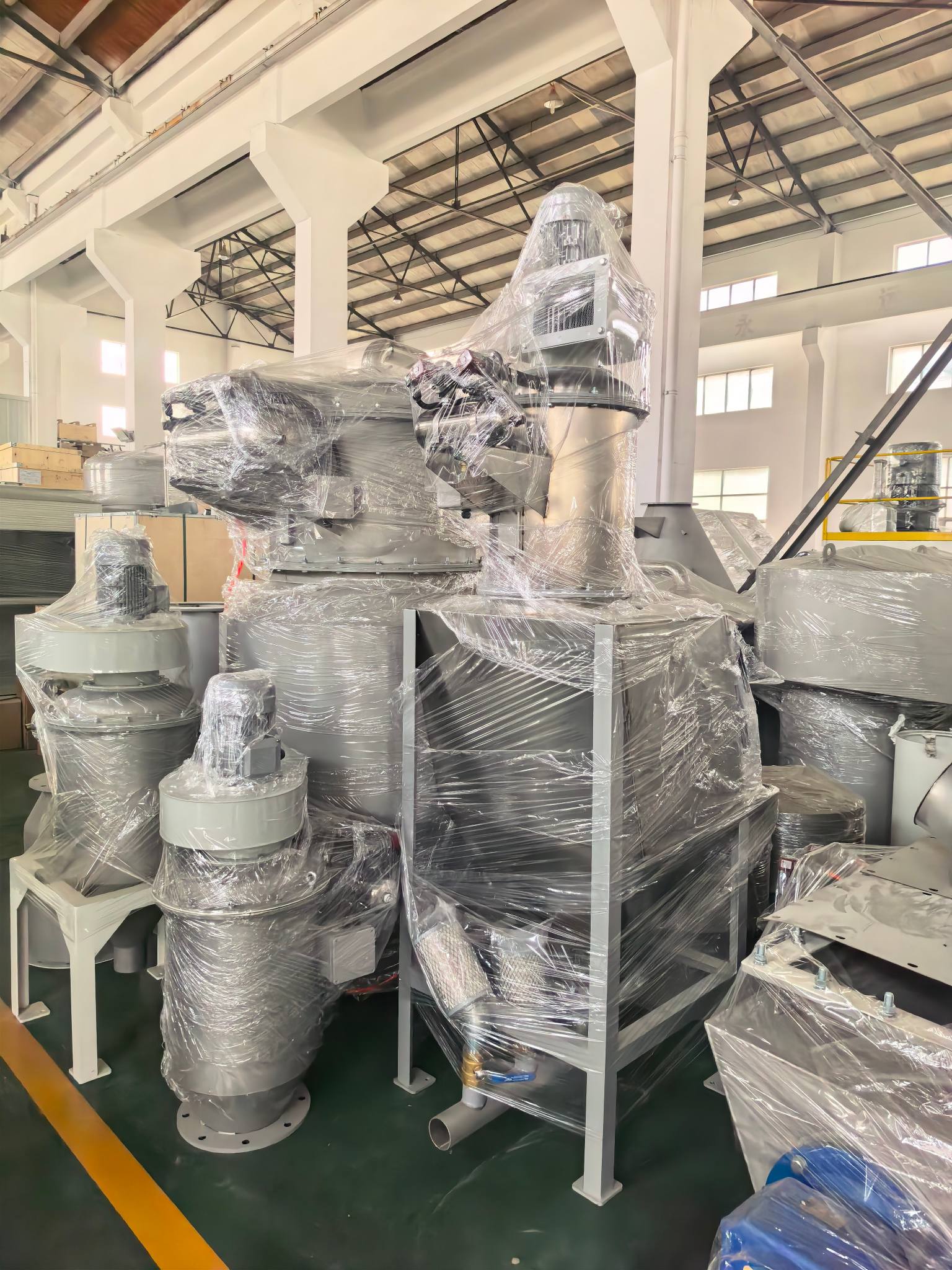
Silo design often concentrates on outlet dimensions and hopper angles, yet the friction between stored solids and the wall quietly decides whether discharge remains steady or collapses into stoppages. Wall friction does not just add a minor resistance; it alters the entire stress field inside the vessel. When friction is high, the bulk material tends to form a stable arch or rathole because the shear forces along the wall counteract gravity more effectively. Conversely, very low friction can shift the flow pattern toward mass flow, but it also reduces the damping effect that keeps eccentric discharge zones from developing. Engineers frequently treat friction coefficients as fixed values, overlooking how they evolve with surface wear, moisture migration, or particle segregation near the wall.
The practical consequences show up as intermittent bridging, sudden surges, or asymmetric withdrawal that places uneven loads on the structure. In many field failures, the root cause is not a miscalculated hopper slope but a progressive change in wall roughness after months of abrasive or cohesive material contact. A liner that starts smooth may become pitted or polished depending on the stored product, shifting the effective friction angle enough to move the operating point from reliable flow to a metastable condition. This is especially problematic for materials that are mildly cohesive or have a wide particle size distribution, because a small increase in wall friction can trigger localized stagnation that feeds back into further compression and hardening of the stagnant zone.
Improving discharge reliability therefore requires treating wall friction as a variable rather than a constant. Periodic inspection of wall surfaces, selection of liners based on long-term frictional behavior instead of initial smoothness, and accounting for the range of moisture or temperature conditions that alter adhesion can prevent many unexpected outages. In retrofit situations, adjusting the flow pattern through inserts or modifying the wall surface often yields better returns than enlarging the outlet. The overlooked role is not simply about friction coefficients in equations; it is about recognizing that the wall is an active participant in the discharge process, and its changing interaction with the stored solid can make the difference between dependable operation and costly downtime.
Vent Sizing Mistakes That Turn Powder Silos into Hazards
Many powder silo incidents trace back to a vent that was simply the wrong size. A vent too small turns routine filling or discharge into a pressure event—air cannot escape fast enough, so the silo roof or shell gets stressed, welds crack, and dust leaks from joints that were never meant to be a release point. The opposite mistake, an oversized vent, allows moisture and humid air to cycle through the stored powder, encouraging caking, bridging, and even microbial growth in food or pharmaceutical grades.
Another overlooked factor is vent sizing for deflagration relief. A silo handling combustible powder needs a vent area matched to the material's Kst value and the vessel's volume, not just to normal air displacement. Undersized explosion vents can't relieve a dust deflagration quickly enough, turning a small ignition into a vessel rupture. Yet many operators scale up from a similar-looking silo without checking the specific powder's explosivity or the vent panel's inertia and discharge ducting.
Finally, vent placement matters as much as area. Roof-mounted vents on a silo filled with fine, cohesive powder can blind over with product, reducing effective area to near zero. Side vents or vents with proper filters and cleaning cycles help, but they need to be checked against the powder's angle of repose and filling pattern. Without that, the silo looks vented on paper but behaves like a sealed vessel when it matters most.
How Humidity Control Inside Silos Prevents Costly Clumping
Moisture doesn’t announce itself loudly in a silo. It seeps in with every fill cycle, hides in headspace air, and condenses when temperature swings overnight. For powders and grains, even a 5% jump in relative humidity can turn free-flowing product into crusted masses that bridge across outlets or rat-hole around discharge augers. The result is never just a clog—it’s hours of manual chipping, lost batches, and equipment strain that maintenance logs rarely forget.
The fix isn’t simply adding more heat; it’s holding the air inside the silo at a dew point that keeps the product’s surface moisture below its sticky threshold. Desiccant dehumidifiers and low-humidity purge systems work continuously, sweeping the headspace and replacing damp air before it can condense on sidewalls or be absorbed by the stored material. Sensors tied to inlet and outlet moisture readings let operators adjust humidity setpoints based on what’s actually being stored, not a generic guess.
When humidity stays under control, discharge stays predictable. Screw feeders and rotary valves don’t have to fight hardened lumps, and product that leaves the silo matches the same flow characteristics it had when it went in. That consistency cuts waste from spoiled or unsalable material, keeps energy use lower than intermittent crisis-mode drying, and spares crews the dangerous job of entering a vessel to break up compacted product.
Automated Level Sensors vs. Manual Checks: What Actually Saves Time
Most comparisons between automated level sensors and manual checks fixate on the few seconds it takes to read a sight glass or dip a tank. That misses the real drain. Manual checks demand walking to the asset, opening hatches or cabinets, recording a reading by hand or into a phone, and then interpreting whether the number is reliable. Even a quick round can eat ten minutes per tank once you factor in travel, safety steps, and logging delays. Automated sensors compress that entire loop into a steady data stream that lands on a dashboard without anyone leaving the control room.
The bigger time savings shows up when things go wrong. A manual schedule might catch a dropping level hours after it started, and by then the response involves scrambling, re-checking, and cleanup. A float switch or radar sensor can flag the trend the moment it crosses a threshold, letting a small team handle a minor adjustment instead of a major spill. That difference is rarely captured in a time study but it’s where the hours actually go.
There’s also the hidden cost of double-checking. Operators often don’t trust a hand-written log, so they verify readings a second time or ask another person to confirm. With automation, the sensor becomes the consistent observer, and confidence builds after a few weeks of matching data. The time saved isn’t just from skipping a walk—it’s from removing the rework and doubt that manual routines quietly pile on.
Bolted vs. Welded Silo Construction for Long-Term Powder Integrity
Choosing between bolted and welded silo construction affects far more than erection speed or upfront cost when the stored material is a fine, moisture-sensitive powder. Bolted silos depend on gasketed seams and precisely torqued fasteners; over years of thermal cycling, those gaskets can creep or harden, and fastener tension can relax, creating hairline gaps where powder escapes or humid air infiltrates. Welded silos, by contrast, offer a continuous shell with no seam leaks, but they demand exceptionally clean weld roots and full penetration to avoid internal crevices that trap powder and promote corrosion from the inside out.
In practice, long-term powder integrity often hinges on how each construction method handles inspection and repair. A bolted silo allows a crew to loosen and replace a damaged panel or gasket without cutting into the shell, which can be a decisive advantage if the stored powder is abrasive and wears through a localized area. On the other hand, welded silos have fewer potential leak paths and can be coated internally with a monolithic lining, but any coating holiday near a weld joint may go undetected until rust streaks appear in the product. For hygroscopic or oxygen-sensitive powders, the welded shell's lack of bolted seams often wins on contamination control, provided the shop applies and tests the internal coating rigorously.
The real differentiator over a 20-year service life is maintenance discipline, not just the joining method. A well-run bolted silo with annual torque checks and gasket sampling can outperform a poorly executed welded silo where stress cracks form at stiffener attachments and remain hidden behind insulation. Conversely, a properly stress-relieved and coated welded silo needs almost no seam maintenance, but any repair requires hot work permits and extended downtime. For long-term powder integrity, the best choice is the one your facility can realistically inspect, maintain, and repair without shortcuts.
FAQ
A safe system incorporates explosion relief panels sized to the specific Kst value of the powder, bonding and grounding to prevent static discharge, and often inert gas blanketing to keep oxygen levels below the limiting oxidant concentration. Interior surfaces are kept smooth and free of ledges to reduce dust accumulation, while filter cartridges use anti-static media and continuous pulse cleaning to prevent combustible dust clouds from forming inside the silo.
Bolted silos offer faster on-site assembly and easier relocation, but the seams can trap fines and may need extra sealing for very fine or hygroscopic powders. Welded silos provide a continuous, leak-tight interior with fewer crevices for contamination, making them preferable for high-purity, food-grade, or moisture-sensitive materials even though they cost more upfront and are harder to modify later.
Flowability determines whether material exits uniformly or forms stable arches and ratholes. Poorly flowing powders like titanium dioxide or cake mix need mass flow hoppers with steep, smooth walls, while free-flowing granules may work with simple conical bottoms. If you skip shear cell testing and guess the discharge angle, you risk partial emptying, spoilage in dead zones, and inconsistent batching.
It is possible but requires careful design with dedicated flexible connections, quick-release access doors for manual cleaning, and ideally separate filter units or washable filter socks. For low-volume multi-product operations, operators often use portable silos or interchangeable liners, plus documented purge and washdown sequences between runs. For high-purity applications, separate silos remain the safer choice because residual dust in corners is nearly impossible to fully eliminate.
Beyond replacing filter bags and checking level sensors, you should inspect interior welds and coatings for wear from abrasive powders, verify that pressure relief devices are not painted shut or blocked, and test aeration pads for even air distribution. Calibrate load cells at least annually, lubricate slide gates and rotary valves, and periodically remove any caked material from the cone section during scheduled shutdowns.
High humidity can cause hygroscopic powders like salt or starch to absorb moisture, leading to caking, fungal growth, or reduced flow. Condensation on silo walls is a common trigger, so insulated shells, heated cones, or dry air purging are often used. In cold climates, thermal cycling can also cause fine powders to compact differently, so maintaining a stable internal temperature is more important than many operators realize.
Fluidizing pads that introduce low-pressure air near the cone are usually the first choice for fine cohesive materials, but they can worsen bridging if the powder becomes aerated and then settles. Mechanical agitators or vibrating bin activators work better for sticky or fatty powders like cocoa or certain pigments. For extreme cases, a combination of a steep hopper angle, a low-friction polymer liner, and controlled vibration provides the most reliable discharge without damaging particle structure.
Conclusion
When evaluating powder storage silo systems, the real measure of performance lies not in total volume but in how the material behaves under confinement. Powder cohesion often dictates whether discharge will be smooth or stall, regardless of how large the silo appears. Equally critical is the coefficient of friction along silo walls—an overlooked factor that can either promote mass flow or cause erratic bridging and ratholing. On the safety side, incorrectly sized vents turn an ordinary silo into a pressure vessel waiting to fail, especially with fine combustible powders. And while ambient humidity may seem trivial, moisture ingress quietly triggers clumping that no amount of mechanical agitation can fully reverse. A well-designed system treats these variables as interconnected, not as isolated specs.
Beyond the physics of powder behavior, practical operating choices shape long-term reliability. Automated level sensors, despite their upfront cost, eliminate the guesswork and labor of manual checks, reducing both downtime and exposure to hazardous entry. When it comes to construction, bolted and welded silos each carry distinct trade-offs: bolted designs allow easier inspection and modular expansion, while welded seams often provide better long-term integrity against fine particle penetration. The best storage systems integrate careful vent sizing, humidity control, and wall friction management with a construction method that matches the powder's abrasiveness and the facility's maintenance philosophy. That combination—not any single feature—is what delivers safe, efficient material handling day after day.
Contact Us
Contact Person: Darye WANG
Email: [email protected]
Tel/WhatsApp: 86-13501017897
Website: https://www.fcntd.com/