

China Power Resistor: A Comprehensive Guide for Engineers and Hobbyists
2026-07-21
Resistors are the unsung heroes of electronics, quietly shaping current and voltage in every circuit. For engineers and hobbyists alike, China has emerged as a powerhouse producing a vast range of power resistors—from wirewound to thick film—offering a blend of performance and cost-effectiveness that’s hard to ignore. Whether you’re designing a high-voltage supply or tinkering with a motor driver, navigating this landscape requires insight into specifications, materials, and reliability. And when precision matters down to the milliohm level, brands like Milliohm step in with low-resistance solutions that can make or break your current-sensing design. In this guide, we’ll pull back the curtain on China’s power resistor scene, decoding datasheets, dodging pitfalls, and uncovering the components that deserve a spot in your next project.
Power Resistors Decoded: From Raw Materials to Finished Components
The journey of a power resistor starts with meticulous raw material selection. Resistive elements are typically crafted from alloys like nichrome or constantan, chosen for their stable temperature coefficients and ability to dissipate heat without degrading. The substrate or core—often high-purity ceramic such as alumina—must withstand thermal shock and provide excellent electrical insulation. Even the terminations, usually tin-plated copper or nickel, are engineered to minimize contact resistance and ensure long-term reliability under thermal cycling.
Manufacturing transforms these materials through tightly controlled processes. For wirewound types, the alloy is precisely wound around the ceramic core, with winding tension and pitch adjusted to achieve target resistance values. Power film resistors employ vacuum-deposited metal layers laser-trimmed to fine-tune resistance. Encapsulation follows, using materials like silicone, epoxy, or vitreous enamel, each selected based on the desired heat dissipation and environmental protection. Every step is monitored to avoid micro-cracks or inconsistencies that could escalate into field failures.
Finished components undergo rigorous electrical and mechanical testing—including surge handling, insulation resistance, and temperature cycling—before being marked and packaged. The result is a passive device capable of sinking hundreds of watts while maintaining a predictable resistance drift. Far from a simple commodity, a power resistor’s seamless integration into circuits reflects a deep interplay between materials science and precision engineering, enabling everything from motor drives to high-frequency snubber networks without drawing attention to itself.
What Datasheets Won’t Tell You About Pulse Handling
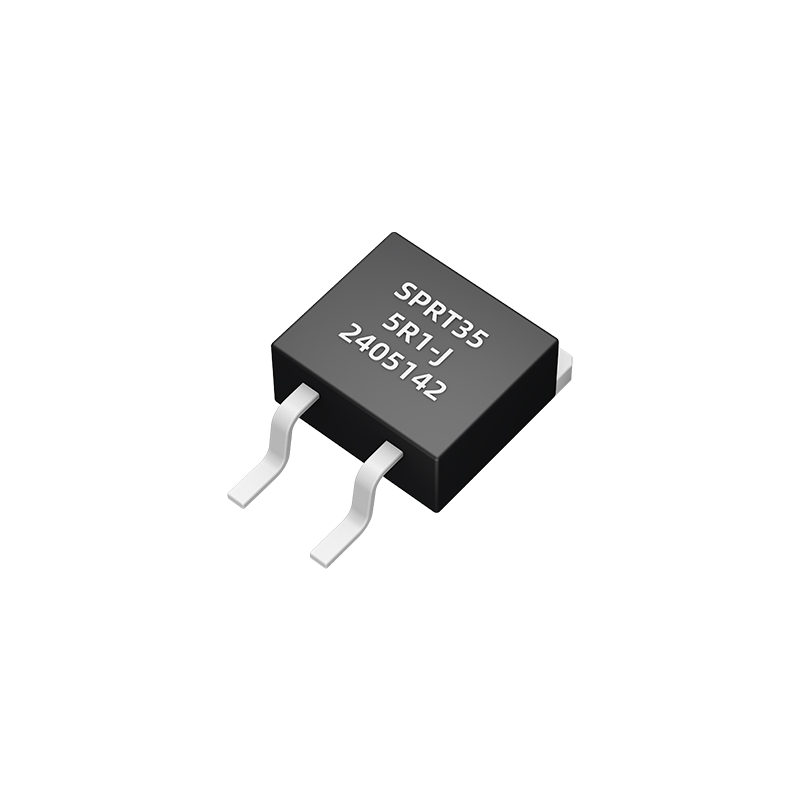
When you scan a datasheet, the pulse rating curves look reassuring—a tidy graph of peak power versus pulse width, often with an exponential decay. But those curves are typically measured under very specific, and sometimes unrealistic, conditions: a single rectangular pulse, starting from a cool 25 °C ambient, with the device allowed to fully cool down between shots. Real circuits rarely behave that way. Repetitive pulsing, variations in pulse shape, and the thermal history of the surrounding PCB all conspire to push the component well outside the safe region implied by the datasheet.
One thing the datasheet won't highlight is the cumulative heating that occurs when pulses arrive faster than the thermal time constant of the part. A MOSFET might survive a single 100 W pulse, but if those pulses repeat even every second, the junction temperature can creep into destructive territory because the silicon never gets a chance to cool to its starting point. Another hidden pitfall is the dynamic resistance change in some devices—like MOVs or PTCs—as they heat up during a pulse, causing the energy absorption to shift in ways not captured by a simple derating chart.
The best way to uncover what the datasheet omits is to test early with realistic waveforms on your actual PCB. Use a thermal camera or a fast thermocouple to track temperature between pulses, and don't trust the pulse power rating if your duty cycle is above a few percent. Also watch for indirect damage: repeated thermal expansion and contraction can degrade solder joints or bond wires, a failure mechanism that never appears in a datasheet table. In the end, pulse handling is as much about thermal management and physical layout as it is about the silicon inside the package.
Balancing Heat, Space, and Budget: A No-Nonsense Approach
Heating a home without wasting money or cramping your living area often comes down to challenging outdated assumptions. Start by mapping out which areas truly need warmth and when. That rarely means keeping every room toasty around the clock. Simple tweaks—like closing doors to unused spaces, adding thick curtains, or repositioning furniture away from radiators—can make a room feel warmer without touching the thermostat. And before chasing expensive upgrades, check if your current system just needs a proper bleed or a filter swap. Many so-called inefficiencies are actually neglect disguised as a need for new gear.
When space is tight, bulky radiators and intrusive ductwork steal more than square footage; they limit how you live. Go for low-profile panels, underfloor pipes, or even a well-placed wood stove that doubles as a focal point. Pair these with a programmable thermostat that aligns with your real routine, not a default schedule dreamed up by a factory. The goal isn't to scrimp on comfort but to match your heat source to how you actually use each corner of your home. A small, well-insulated room with a modest heater often outperforms a large, leaky space fed by an overpowered system—and leaves more cash in your pocket long after the installation dust settles.
Common Failures and How to Prevent Them Before Prototyping
Jumping straight into prototypes without a clear grasp of requirements is a recipe for wasted effort. Teams often discover mid-build that they’ve misinterpreted a key feature, forcing them to backtrack. To avoid this, run a structured requirements review with stakeholders where every assumption is challenged. Document edge cases and user flows in plain language before a single wireframe exists. This pre-work exposes mismatched expectations early, saving days of rework.
Another common pitfall is skipping feasibility checks on critical technical or design choices. It’s tempting to assume a slick animation or a complex data sync will ‘just work’, only to hit a wall later. Instead, build tiny proof-of-concept spikes for the riskiest parts. A quick and dirty test of an API integration or a novel interaction can reveal hidden constraints. These small experiments cost a fraction of a full prototype and guide the team toward viable paths from the start.
Equally damaging is neglecting the feedback loop from the people who’ll actually use the product. Building in isolation lets blind spots fester. Before prototyping, share rough sketches or scenario storyboards with a handful of target users. Their reactions often uncover fundamental misunderstandings—like a workflow that doesn’t exist in reality or a terminology mismatch. Early corrections here prevent the prototype from reinforcing a flawed concept.
Why Some Chinese Manufacturers Stand Out in Custom Solutions
The real differentiator often comes down to raw adaptability. Many Chinese factories have shed the old stereotype of rigid mass production, evolving into agile partners that can pivot on a dime. When a client requests a material substitution mid-project or needs a unique form factor that would stump a conventional production line, these manufacturers don’t just say yes—they figure it out quickly, often reconfiguring workflows within days instead of weeks. This is possible because they’ve invested on deep engineering floors that blend experienced craftsmen with younger technicians who are unafraid to experiment, making on-the-fly problem-solving a core competency rather than an exception.
Another overlooked advantage is their ability to combine scale with a boutique mindset. It’s not uncommon for a mid-sized factory to handle a 50,000-unit order with the same attention to detail as a 500-unit pilot. They achieve this by keeping supply chains tightly clustered—components, tooling, and finishing services are often within a few blocks—which compresses lead times and allows for transparent, face-to-face collaboration. This density also breeds informal knowledge sharing; if one facility develops a clever jig or a more efficient way to bond materials, the innovation spreads organically, benefiting even the smallest custom jobs.
Finally, there’s a cultural layer that’s easy to miss from a spreadsheet. The most effective suppliers view your project as a shared venture rather than a transaction. When you send over a sketch or a half-formed idea, they don’t just quote a price—they’ll often send back a photo of a rough prototype made overnight, followed by a voice message with suggestions you hadn’t considered. This implicit commitment to showing progress, not just promising it, builds trust at a pace that formal contracts rarely capture. In a world where “custom” can too easily become a buzzword, that level of personal investment quietly sets certain Chinese manufacturers apart.
Practical Selection Tips Without the Marketing Fluff
When you strip away the buzzwords and exaggerated claims, choosing the right product comes down to how it fits into your daily life. Ignore the specs that sound impressive but mean nothing in practice—focus instead on the handful of features you'll actually use. If a device promises a 48-hour battery but you're always near an outlet, that shouldn't sway your decision. Conversely, if portability is key, prioritize weight and dimensions over raw power. Real usefulness reveals itself in the mundane moments, not in the highlight reel of a commercial.
Be skeptical of reviews that only gush without mentioning drawbacks. Genuine feedback often includes small annoyances—a slightly awkward button placement, a companion app that feels clunky, or a finish that picks up fingerprints easily. Look for patterns in these minor complaints; they often signal how a product wears on you over weeks and months, long after the initial excitement fades. Also, consider the accessory ecosystem and replacement costs. A tempting low upfront price can be a trap if basic add-ons are overpriced or hard to find.
Finally, rely on your own hands-on experience whenever possible. Visit a physical store, borrow from a friend, or order from a retailer with a generous return policy. What feels comfortable for one person may be awkward for you. Test in conditions that match your reality—if you plan to use something outdoors, see how it handles direct sunlight or wind noise. Marketing materials rarely show these imperfect scenarios, but they're where true satisfaction is won or lost. Trust your instincts over a slick sales pitch, and you'll end up with gear that quietly gets the job done without demanding constant attention or upgrades.
FAQ
A China power resistor is a type of resistor manufactured in China specifically designed to handle higher power dissipation compared to standard signal resistors. They typically feature robust construction with materials like wirewound elements, thick film on ceramic substrates, or metal oxide coatings. The key difference lies in their power rating, thermal management, and physical size — they are built to operate in circuits where significant current flow generates heat, often incorporating heat sinks or being mounted on chassis to dissipate that energy efficiently.
Chinese power resistors have gained a strong reputation for offering a wide range of specifications at competitive prices. Many factories in Shenzhen and other industrial hubs have honed their manufacturing processes, resulting in components that meet or exceed international standards like RoHS and CE. You'll find everything from tiny 1W SMD units to massive 100W aluminum-housed variants, often with shorter lead times and customizable options for OEM designs. Plus, the market supports both high-volume industrial orders and small batches for hobbyists through global distribution channels.
First, calculate the expected power dissipation using P=I²R or P=V²/R. Select a resistor with a power rating at least twice the calculated value to ensure reliability — a 2x safety margin is common. Next, consider the environment: high ambient temperatures require derating (check the manufacturer's derating curve). Forced air cooling or a heat sink can extend the effective power handling. Also, examine the resistor's construction: wirewound types handle pulse loads well but may have inductance, while thick film options offer non-inductive performance for high-frequency applications. Finally, verify voltage rating and physical size constraints.
Certainly. The main varieties include: Wirewound resistors, available in cement-coated or aluminum-housed forms — excellent for high power dissipation (up to hundreds of watts) in braking systems, power supplies, and motor controls. Thick film power resistors, often in TO-220 or SMD packages, favored in automotive and industrial electronics due to low inductance and compact size. Metal oxide film resistors provide good stability for medium power in harsh environments. Ceramic composition resistors are economical solutions for general-purpose power clamping. Lastly, high-voltage thick film dividers serve in power metering and HV supplies.
Most manufacturers adhere to globally recognized outlines: through-hole parts frequently use the ubiquitous rectangular cement (SQ) or vitreous enamel (RX) styles with axial leads. SMD power resistors come in standard sizes from 0805 up to 2512 and beyond, with some higher-power units using a TO-263 (D2PAK) footprint. Aluminum-housed chassis-mount resistors follow similar form factors to Dale or Arcol types, with mounting holes for secure attachment to heatsinks. Importantly, many Chinese datasheets now include both metric and imperial dimensions, making mechanical integration straightforward for international engineers.
While the quality of Chinese components has vastly improved, it's wise to take precautions. Source resistors from established manufacturers with certifications like ISO 9001 or IATF 16949 for automotive-grade. Look for full characterization data, including pulse endurance, temperature coefficient, and aging curves. In critical applications, consider performing incoming inspection: visual checks, resistance tolerance verification, and perhaps a brief burn-in test under load. For hobbyists, buying from reputable distributors with traceability (DigiKey, Mouser, LCSC) minimizes counterfeit risks. Overall, when properly specified, they perform on par with other international brands.
Conclusion
Understanding power resistors goes beyond just checking resistance and wattage. The journey from raw materials—like metal alloys, ceramic cores, and special coatings—to the finished component directly impacts performance under stress. For instance, pulse handling is rarely captured accurately in typical datasheets; a resistor may survive thousands of low-energy pulses but fail instantly when a single high-energy spike exceeds its thermal mass. This is where balancing heat dissipation, physical footprint, and cost becomes a pragmatic art. Engineers often overlook failure modes like cracked substrates, degraded solder joints, or resistive element drift, which can be traced back to mismatched thermal expansion or inadequate derating. Spotting these risks before prototyping saves time and avoids redesign loops.
This is exactly where certain Chinese manufacturers distinguish themselves. Rather than offering only off-the-shelf parts, many provide custom solutions that fine-tune the material blend, form factor, and termination style to suit niche applications—whether it’s a pulse-tolerant wirewound for EV precharge circuits or a thick-film chip that fits a cramped power supply. When selecting a power resistor, ignore the marketing jargon about 'industry-leading' specs and instead verify pulse energy curves, thermal impedance data, and transient overload test results. Ask for application-specific samples with documented life-test data under your actual load profile. By focusing on what truly matters—materials, testing transparency, and a manufacturer’s willingness to collaborate on design—you get a reliable component without the fluff.
Contact Us
Contact Person: Yuying Gao
Email: [email protected]
Tel/WhatsApp: +86 18926013721
Website: https://en.milliohm.net/