

Energy Storage System Factory: How Advanced Manufacturing Meets Rising Demand
2026-09-04
Energy storage is no longer a niche piece of the grid puzzle—it’s the backbone of a race to electrify everything. Behind that shift, factories are being pushed past old limits, and advanced manufacturing is what separates those scaling fast from those falling behind. At Chang Song, that pressure isn’t a threat; it’s the reason every line, process, and quality check is being rebuilt for the surge ahead.
From Raw Cells to Grid-Ready Systems Under One Roof
The journey from individual battery cells to fully integrated energy storage begins long before the first module is assembled. Raw cells arrive with inherent variations in voltage, internal resistance, and capacity—differences that, if left unmanaged, would cripple system performance and lifespan. Our production floor handles the entire transformation sequence: cell grading and sorting, module welding, battery management system programming, enclosure sealing, and final grid-compliance testing. No subcontracting, no handoffs between distant facilities. Every step happens under the same roof, allowing engineers to trace a single cell from its arrival dock all the way to a containerized system ready for utility interconnection.
What makes this vertical integration practical is not just logistics but calibration. When cell characterization and pack assembly share the same air supply and the same data pipeline, tolerances tighten naturally. We can dial in compression forces, thermal runaway barriers, and state-of-charge balancing algorithms based on real-time feedback from the very cells being processed an hour earlier. That closed loop eliminates the usual three-to-six-week lag between cell sourcing and system validation. The result is a production line that behaves less like a factory and more like a continuous reliability experiment—one where each grid-ready cabinet carries a complete, auditable history of how its raw materials became a dispatchable asset.
For grid operators, the benefit shows up in commissioning speed and long-term consistency. A system built entirely in-house doesn't need field retrofits to reconcile mismatched modules or firmware versions. Every DC block, thermal interface, and protective relay has already been tested against the exact cells it will run with for the next decade. That is why a single-roof approach matters: it turns battery manufacturing from a fragmented supply chain into a controlled process where raw cells and grid-ready systems are separated by meters, not months.
How Flexible Lines Absorb Sudden Order Surges
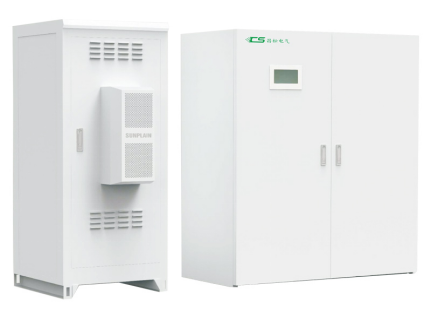
Flexible production lines are not just about extra machines — they are built around quick changeover routines, cross-trained operators, and modular workstations that can be rearranged within hours. When a sudden order spike hits, these lines can shift from one product variant to another without a complete teardown, absorbing the surge by repurposing existing capacity rather than waiting for new equipment.
The real buffer often comes from small, movable assets: portable conveyors, adjustable jigs, and tool carts that roll between cells. Instead of batching orders in a fixed sequence, supervisors can split the workforce into floating teams that move to whichever station is bottlenecked. This fluid staffing means a 30% volume jump does not require a 30% increase in headcount — it is absorbed by reorganizing how people and tools flow through the line.
Surge absorption also relies on short interval control. Team leads review output every 15 or 30 minutes, so a drift in pace is caught early. If demand keeps climbing, the line can borrow hours from upstream prep areas or downstream packing stations, keeping the main assembly flow unbroken. The result is a system that bends under pressure rather than breaking, turning an unpredictable order spike into a manageable, temporary stretch of throughput.
Precision Welding and the Fight Against Early Cell Degradation
When battery cells are welded together, the heat-affected zone becomes a silent battleground. A weld that looks clean on the outside can hide micro-fractures or uneven grain structures just beneath the surface. Over the first hundred charge cycles, those tiny imperfections invite localized corrosion, which accelerates capacity fade long before the pack should show any signs of age.
Precision isn't just about tighter tolerances—it's about controlling energy input at the exact point where two foils meet. Using pulsed laser or micro-TIG techniques, manufacturers can narrow the heat-affected zone to a few dozen microns. That leaves the surrounding anode and cathode coatings largely untouched, so the electrolyte stays chemically stable instead of breaking down into resistive byproducts.
The real payoff shows up in cycle-life testing. Welds performed with this level of control consistently delay the onset of the knee point—the moment when capacity starts to drop steeply. Rather than treating welding as a purely mechanical step, it becomes part of the cell's chemical defense system, keeping the internals calm long enough for the pack to outlive its warranty.
The Data Feedback Loop That Keeps Quality Consistent at Scale
Quality doesn't stay consistent by accident when you're processing thousands of items a day. It stays consistent because you build a loop where every output gets measured, every mistake gets traced back to its source, and every fix gets folded into the next run. This isn't a one-time audit; it's a continuous circuit that tightens with each cycle.
The loop usually starts with clear, observable criteria for what "good" looks like. Then you sample outputs, flag deviations, and push those flags into a review queue. The key is that human or automated corrections don't just patch the immediate error—they get converted into new rules, updated examples, or adjusted thresholds. Over time, the system learns from its near-misses, not just its outright failures.
What makes this work at scale is that the feedback isn't limited to a few experts. Frontline reviewers, downstream users, and even simple completion rates all feed the same loop. When the loop is fast enough, a problem spotted in the morning can be corrected by the afternoon, and that correction automatically applies to every future item. That's how you keep a thousand hands moving in the same direction without micromanaging each one.
Rapid Changeovers for Diverse Storage Configurations
Switching between storage layouts often carries hidden costs—lost time, misplaced items, and worker frustration. Our approach reduces those transitions to a matter of minutes, not hours. By standardizing connection points and using modular components that snap into place without tools, crews can reconfigure shelving, racking, or bin systems mid-shift without breaking rhythm.
The real advantage shows up when product mixes shift daily. Instead of dedicating zones to fixed formats, teams treat the floor like a flexible grid. Labels, dividers, and flow rails are pre-marked for multiple setups, so a single person can adjust spacing and depth right at the point of use. This keeps inventory accessible whether pallets shrink, totes multiply, or fragile items need custom cradles.
Frequent changeovers also invite errors, so we built visual cues into the hardware itself. Color-coded brackets, etched alignment marks, and magnetic stops make correct placement obvious, even for temporary labor. The result is a storage environment that adapts as fast as orders change, without sacrificing safety or accuracy.
Sustainable Materials Handling in High-Volume Assembly
Shifting a high-volume assembly line toward sustainable materials handling rarely starts with a dramatic overhaul. More often, it begins with questioning the quiet routines that have gone unchallenged for years—how pallets are wrapped, what happens to offcuts, why certain bins are lined with virgin plastic when a reclaimed alternative could perform just as well. In fast-moving production environments, the temptation is to treat any change as a risk to throughput. Yet the teams that succeed are the ones that treat material flow as a design problem, not a housekeeping task. They map every touchpoint from receiving dock to final workstation, looking for moments where a lighter container, a reusable dunnage layer, or a local regrind loop can remove both waste and cost without slowing the line.
One practical lever is standardizing returnable packaging at the component level. Instead of accepting that each supplier ships in its own disposable carton, high-volume plants are pushing for collapsible totes and trays that travel back upstream, get washed or wiped down, and re-enter circulation. This demands coordination with procurement and logistics, but the payoff is immediate: less cardboard dust near sensitive assembly steps, fewer dumpster pickups, and a measurable drop in per-unit packaging expense. Another overlooked area is internal conveyance. Swapping out single-use stretch film for corner boards and adjustable straps, or replacing foam inserts with molded pulp made from the facility's own paper waste, keeps materials performing their protective role while cutting the stream of rubbish leaving the dock.
What separates genuine progress from greenwashing in this setting is measurement that operators can actually see. A dashboard showing kilograms of scrap diverted per shift, or a simple tag on each tote indicating its number of round trips, turns sustainability from a corporate pledge into a daily habit. High-volume assembly has no patience for initiatives that require constant supervision; the best material handling changes are the ones that make the sustainable choice the easiest choice. When a line worker can drop a worn tote onto a return conveyor without thinking, when a supplier automatically receives credit for returned containers, and when the cost accounting finally reflects the true price of disposal, sustainable handling stops being a special project and becomes simply how the plant runs.
FAQ
Modern facilities are built around data-driven production loops rather than fixed assembly lines. Real-time sensors track electrode coating thickness, cell pressure, and welding temperature, letting engineers adjust parameters before defects spread. This closed-loop approach keeps yield high even as cell designs change between product generations.
High-speed stacking and winding machines now produce cells in seconds instead of minutes, while automated guided vehicles move components between stations without bottlenecks. By digitizing the entire production flow, factories can spot slowdowns early and reroute work to underused lines, squeezing more output from the same floor space.
Laser welding and ultrasonic bonding handle thousands of joints per hour with far more consistency than manual assembly. Machine vision systems scan every cell for surface flaws, electrolyte leakage, or tab misalignment, and reject units before they reach pack assembly. Without these tools, scaling to gigawatt-hour capacity would be nearly impossible.
Every cell gets a unique digital identifier that tracks its formation cycling, capacity, and internal resistance through the entire line. Statistical process control flags any drift in voltage or temperature curves, triggering immediate investigation. End-of-line testing then subjects finished racks to charge-discharge cycles and thermal stress scenarios that mimic real grid duty.
Localizing electrode and electrolyte production shortens lead times and cuts transport costs, which matters when battery packs are heavy and regulated. It also lets factories tune chemistries to regional climate and grid codes, such as cold-weather performance or fast frequency response. This regional focus reduces dependency on distant suppliers and speeds up service and warranty support.
They are shifting from purely speed-focused metrics to inline safety checks that don't slow the line. For example, dry-room humidity control and electrolyte filling under vacuum happen in automated enclosures, removing human error. At the same time, formation protocols are optimized using machine learning to cut aging time while preserving cell life, so faster output doesn't mean shorter lifespan.
Operators now need to read sensor dashboards and diagnose robotic workcells rather than perform repetitive manual assembly. Data literacy is just as important as mechanical aptitude, since most troubleshooting starts with a trend chart. Factories are investing in apprenticeship programs that blend electrical engineering basics with software-defined production systems.
Instead of one monolithic line, a modular setup uses self-contained stations for coating, stacking, filling, and formation that can be added or reconfigured as demand shifts. This means a factory can expand capacity in smaller capital steps and switch between prismatic, pouch, or cylindrical formats with minimal downtime. It also makes technology upgrades easier, since a new welding module can be tested alongside an older one without shutting everything down.
Conclusion
Inside a modern energy storage system factory, the journey from individual battery cells to grid-ready enclosures happens without leaving the building. Raw cells arrive at one end, and by the time they pass through module stacking, busbar joining, and enclosure integration, they have become complete systems ready for utility or commercial use. This vertical integration shortens lead times and gives engineers direct control over every stage, which is especially important when demand spikes. Flexible production lines are built to absorb sudden order surges by reallocating stations and adjusting shift patterns rather than waiting for new equipment. Rapid changeovers allow one line to switch between different storage configurations—cabinet-based, containerized, or rack-mounted—within hours, not days.
Quality hinges on precision welding and real-time process data. Poor welds at cell interconnects are a common source of early degradation, so automated laser welding with in-line inspection catches microscopic defects before they become field failures. The data feedback loop runs continuously: sensors track weld resistance, torque values, and thermal imaging results, feeding adjustments back to the line to keep quality consistent at high volumes. Meanwhile, sustainable materials handling reduces waste from packaging, coolant, and scrap metal, turning high-volume assembly into a cleaner operation. Together these practices allow a single factory to meet rising demand without sacrificing reliability or environmental responsibility.
Contact Us
Contact Person: Tonglun Chen
Email: [email protected]
Tel/WhatsApp: 8618906642555
Website: https://www.cncsele.com