
Flood Gate Company: Innovative Water Control Solutions for Modern Infrastructure
2026-07-24
In an era where climate unpredictability demands smarter infrastructure, flood control has moved from reactive measures to proactive engineering. THT stands at the forefront, redefining water control with solutions that blend precision, durability, and innovation. From protecting urban centers to safeguarding critical industrial sites, THT's flood gates are not just barriers—they are intelligent systems designed to anticipate and adapt. This blog explores how modern flood gate technology is reshaping resilience, and why THT’s approach offers a blueprint for the infrastructure of tomorrow.
Redefining Flood Defense for a Changing Climate
The floods we once designed for are not the floods we now face. Historical rainfall records and river flow data have lost their predictive power as atmospheric patterns shift. Coastal cities grapple with king tides that routinely swallow sidewalks, while inland communities watch hundred-year storms become decade events. This new reality demands defense strategies that don't merely hold back water, but learn from it. We're moving beyond static concrete walls toward systems that incorporate wetlands restoration, porous urban surfaces, and real-time sensor networks. The goal isn't to dominate nature, but to negotiate with it, accepting that some areas must be given back to the water to protect what matters most.
Traditional flood defense treats water as an enemy to be repelled by brute force. But rigid infrastructure often fails catastrophically when exceeded, leaving no room for error. A redefined approach sees floodwaters as an intermittent guest: we make space for rivers to swell, design parks that double as temporary reservoirs, and elevate critical infrastructure above projected surge levels. Communities like Rotterdam have pioneered water plazas that transform from basketball courts to retention basins during heavy rain, blending utility with daily life. This shift requires updating not only engineering manuals but also zoning laws and insurance frameworks that incentivize building in high-risk zones.
Equity must anchor this redefinition. Flood resilience isn't just about protecting property values; it's about safeguarding the neighborhoods where marginalized communities have long borne the brunt of underinvestment in drainage and levees. Solutions like community-led buyout programs, elevated housing on stilts, and micro-grants for rain garden installations can tilt the balance. The changing climate doesn't negotiate, but we can rebuild our relationship with water so that safety isn't a luxury. This means listening to engineers, ecologists, and residents equally, and acting before the next storm rewrites the damage maps once again.
Engineering Precision in Every Gate
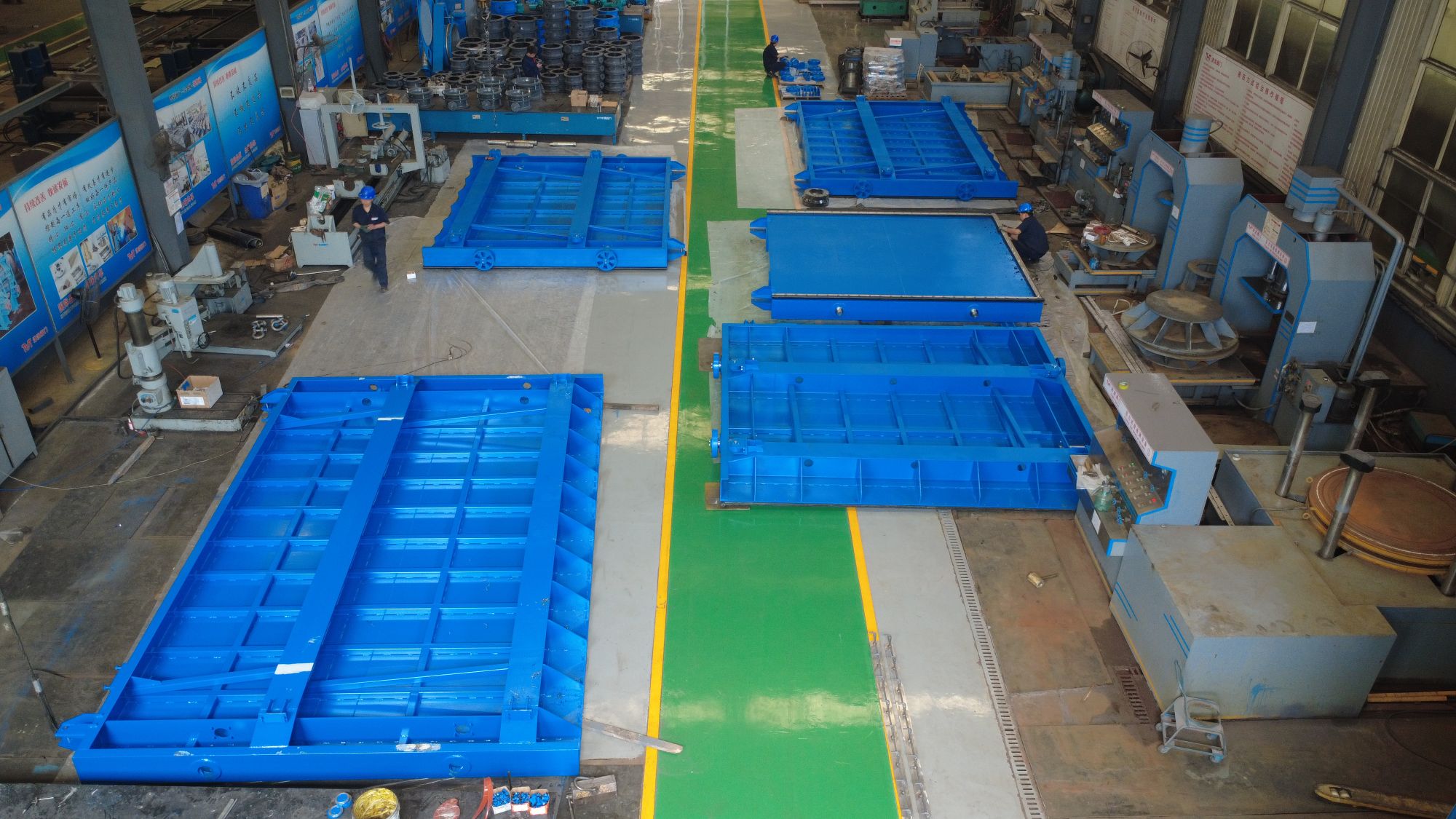
A gate is more than a barrier—it’s a statement of intent. From the first sketch to the final weld, every dimension is scrutinized, every joint engineered for flawless motion. We obsess over tolerances that others overlook, ensuring that each gate swings, slides, or folds with a fluidity that belies its weight. The result is a piece of hardware that performs as precisely as it looks.
Behind the scenes, our process blends time‑tested craftsmanship with modern fabrication techniques. Laser‑cut components slot together with hairline accuracy, while hand‑finished surfaces eliminate even the faintest irregularity. Bearings are seated by feel, not just by torque settings, so the gate’s trajectory is butter‑smooth from day one. This marriage of technique and touch means every installation feels custom‑tuned, even when produced at scale.
The payoff is tangible the moment your hand meets the latch. There’s no rattle, no resistance—just a quiet, confident movement that hints at the engineering beneath. Whether it secures a private estate or a public courtyard, the gate becomes a quiet benchmark for quality, one that visitors notice without always knowing why. That unspoken precision is what we build into every project, from the inside out.
Unexpected Durability, Even in the Harshest Conditions
When you first hold it, there's a sense of solidity that's hard to put into words—a quiet confidence that this thing won't let you down. It’s not just about rugged looks; it’s been engineered to take a beating and come back asking for more. From the reinforced edges to the tightly sealed seams, every detail whispers resilience. You might not plan on dropping it from a ladder or leaving it out in a dust storm, but if life throws those curveballs, it won’t flinch. The materials feel substantial without being bulky, striking that rare balance between brawn and everyday usability.
What truly sets it apart is how it handles the extremes that would cripple lesser gear. Subzero temperatures don’t make it brittle; blistering heat doesn’t warp its composure. Humidity, salt spray, fine sand—all the silent killers of electronics and tools—barely leave a mark. There’s no need to baby it or constantly check for cracks. It’s been tested in scenarios most people will never encounter, simply because the creators wanted to ensure that wherever you go, it’s already proven itself. That kind of overengineering brings a peace of mind you don’t realize you’ve been missing.
But durability here isn’t just about survival; it’s about maintaining performance under stress. Buttons keep their click, ports stay free of debris, and the internal workings remain protected even when the outside is scuffed and scarred. It ages gracefully—the kinds of marks that would spell the end for other products become mere character lines. After months of hard use, you’ll find it still works exactly as it did on day one, and that consistency is a quiet kind of luxury. No dramas, no failures, just a tool that refuses to quit.
Where Smart Design Meets Real-World Demands
Great design isn’t just about looking good—it’s about solving problems in ways that feel effortless. When smart design aligns with real-world demands, the result is something that not only catches the eye but also makes daily life smoother. It’s the difference between a product that sits on a shelf and one that becomes indispensable.
What sets this approach apart is the refusal to settle for surface-level solutions. Every choice is rooted in understanding how people actually live, work, and move through their spaces. From the weight of a handle to the way light falls across a room, details are fine-tuned to anticipate needs before they arise. It’s design that listens.
The true test comes when form and function refuse to compromise. Here, clean lines and intuitive layouts aren’t just aesthetic preferences—they’re direct responses to clutter, fatigue, and wasted time. The result is an environment that feels less designed and more discovered, as if it was always meant to be this way.
Silent Guardians of Critical Infrastructure
Behind every light switch, faucet, and internet connection lies an invisible network of systems that never sleep. These silent guardians—automated sensors, redundant power supplies, and self-healing software—operate in the background, detecting anomalies long before they become disasters. They don’t seek recognition, yet their vigilance keeps hospitals running, water flowing, and data centers humming through storms, cyberattacks, and mechanical failures.
Unlike the loud alarms and flashing lights of emergency response, these protectors work in subtle, often unnoticed ways. A vibration sensor on a pipeline can distinguish between normal operations and the early signs of a leak, triggering adjustments that prevent environmental damage. In substations, thermal imaging cameras quietly monitor equipment temperatures, flagging overheating components that human eyes might miss. It’s a world of predictive intelligence, where problems are solved before they ever reach the public eye.
The resilience of modern society rests on their shoulders, yet their stories remain largely untold. They learn and adapt—machine learning models refine their accuracy, and modular designs allow for seamless upgrades without downtime. These guardians don’t crave headlines; their greatest success is a crisis that never happens. And while we go about our daily lives, they stand watch, ensuring that the invisible backbone of civilization stays strong and unbroken.
A Legacy of Trust, Built One Project at a Time
Every structure we raise begins with listening. Before a single beam is placed or a foundation poured, we sit down with clients to understand not just the blueprints, but the vision behind them. That early investment in honest communication sets the tone for everything that follows. Over the years, those conversations have built something far stronger than concrete: a quiet confidence that carries from one completion date to the next, turning first-time clients into long-term advocates.
There’s no shortcut to earning that kind of regard. It comes from late nights spent double-checking material orders, from showing up on a Saturday to walk a family through framing choices, and from admitting when a better approach surfaces mid-project. Each finished build isn’t simply handed over—it’s delivered with a handshake that carries the weight of past promises kept. That consistency, repeated across dozens of timelines and budgets, becomes the real foundation we stand on.
What outsiders often see as a finished space, we recognize as a chapter in a much longer story. The real measure of our work isn’t the ribbon-cutting ceremony; it’s the call five years later asking us to take on something new. That pattern of return isn’t accidental—it’s the natural result of treating each project as if the next one depends entirely on how this one ends. Piece by piece, trust solidifies into a legacy that no marketing campaign could ever replicate.
FAQ
We don’t just manufacture barriers—we engineer adaptive flood defense systems that integrate real-time data, self-actuating mechanisms, and modular designs. Our solutions anticipate water behavior rather than just react to it.
Our gates use embedded sensors and AI-driven triggers that detect rapid water level changes and activate instantly, even during power outages, thanks to redundant mechanical backups.
Absolutely. We collaborate with urban planners to design low-profile, retractable gates that can be hidden within landscapes, under roads, or disguised as public art, preserving visual appeal while delivering protection.
We design for minimal upkeep. Most components are corrosion-resistant and self-lubricating, with remote diagnostics alerting our team before issues arise. Annual inspections are often all that’s needed.
Yes, we offer marine-grade alloys and chemical-resistant coatings tailored for aggressive settings like wastewater plants, chemical factories, and coastal facilities, ensuring decades of reliable operation.
Portable variants can be operational within hours without heavy machinery, using our quick-lock anchoring. Permanent installations have fail-safe designs that activate in under two minutes once triggered.
Definitely. Our integrated platform offers real-time water level monitoring, predictive flood modeling, and historical trend analysis to help clients make proactive infrastructure decisions.
We offer 24/7 remote monitoring, a dedicated engineer per project, on-site training, and a spare parts guarantee—with fast turnaround times to ensure continuous protection.
Conclusion
Flood Gate Company has spent decades transforming the way cities and industries approach water management, moving beyond one-size-fits-all barriers to engineered solutions that respond dynamically to a rapidly shifting climate. Every gate we produce is a fusion of precision engineering and adaptive design, built to handle the unpredictable surges of modern waterways. Our approach starts with understanding the unique hydraulic pressures of each site, then crafting gates that integrate seamlessly into existing infrastructure while quietly outperforming expectations. From stormwater retention systems to tidal flood barriers, the focus remains on reliability that doesn't demand constant attention—gates that function so smoothly they fade into the background of daily operations.
That quiet dependability is no accident; it's the result of rigorous testing under conditions that far exceed real-world extremes, ensuring unexpected durability in salt-ravaged estuaries and debris-laden rivers alike. Our installations become silent guardians of critical infrastructure—subway networks, power stations, and waterfront hospitals—protecting assets that entire communities rely on. With every completed project, we reinforce a legacy built on trust, earned through decades of delivering on promises without fanfare. Rather than chasing trends, we refine materials, simplify maintenance, and listen closely to the engineers and emergency managers who depend on our gates. This patient, project-by-project commitment has made Flood Gate Company a preferred partner for those who understand that real flood defense is about blending smarter thinking with tougher hardware, and standing behind both for the long haul.
Contact Us
Contact Person: Su Zhang
Email: [email protected]
Tel/WhatsApp: +86-25219206
Website: https://www.tht-valve.com/