

Forged Steel Gate Valve OEM: Key Factors for Reliable Custom Manufacturing
2026-11-16
OEM custom manufacturing for forged steel gate valves sounds straightforward—until you realize how many ways it can go wrong. A reliable partner must nail forging integrity, machining precision, and testing documentation without letting lead times drift. At CRXV, we've learned which factors actually separate a valve that lasts from one that fails early. Here's what to look for before you commit.
Forging Quality Determines How Long the Valve Body Lasts
A valve body is only as reliable as the forging that shaped it. During forging, the metal's grain flow follows the contours of the part, which gives the body far better fatigue resistance than a cast or machined-from-bar equivalent. If the forging temperature is off, or the dies are not properly maintained, small laps and cold shuts can form near the flanges and seat pockets. These defects often go unnoticed, but under repeated pressure cycles they become stress concentrators that eventually open into cracks.
The cleanliness of the starting billet matters just as much as the final shape. Inclusions, pipe, or remnant porosity from the ingot stage get compressed or folded during forging, creating weak planes inside the wall. A high-quality forge shop controls the reduction ratio, re-heats between operations, and performs ultrasonic testing before machining. That way, the finished valve body retains uniform wall thickness and consistent mechanical properties from end to end.
Service life is decided long before the valve is ever installed. Every imperfect forging shortcut, from skipped normalizing to rushed cooling, shortens the time to first leak. When the forging is done right, the body handles thermal shock, pressure spikes, and corrosive media without cracking. That margin is what keeps a critical valve in service for decades instead of becoming a scheduled replacement item after a few years.
Why Custom Gate Valves Need Application-Specific Design Reviews
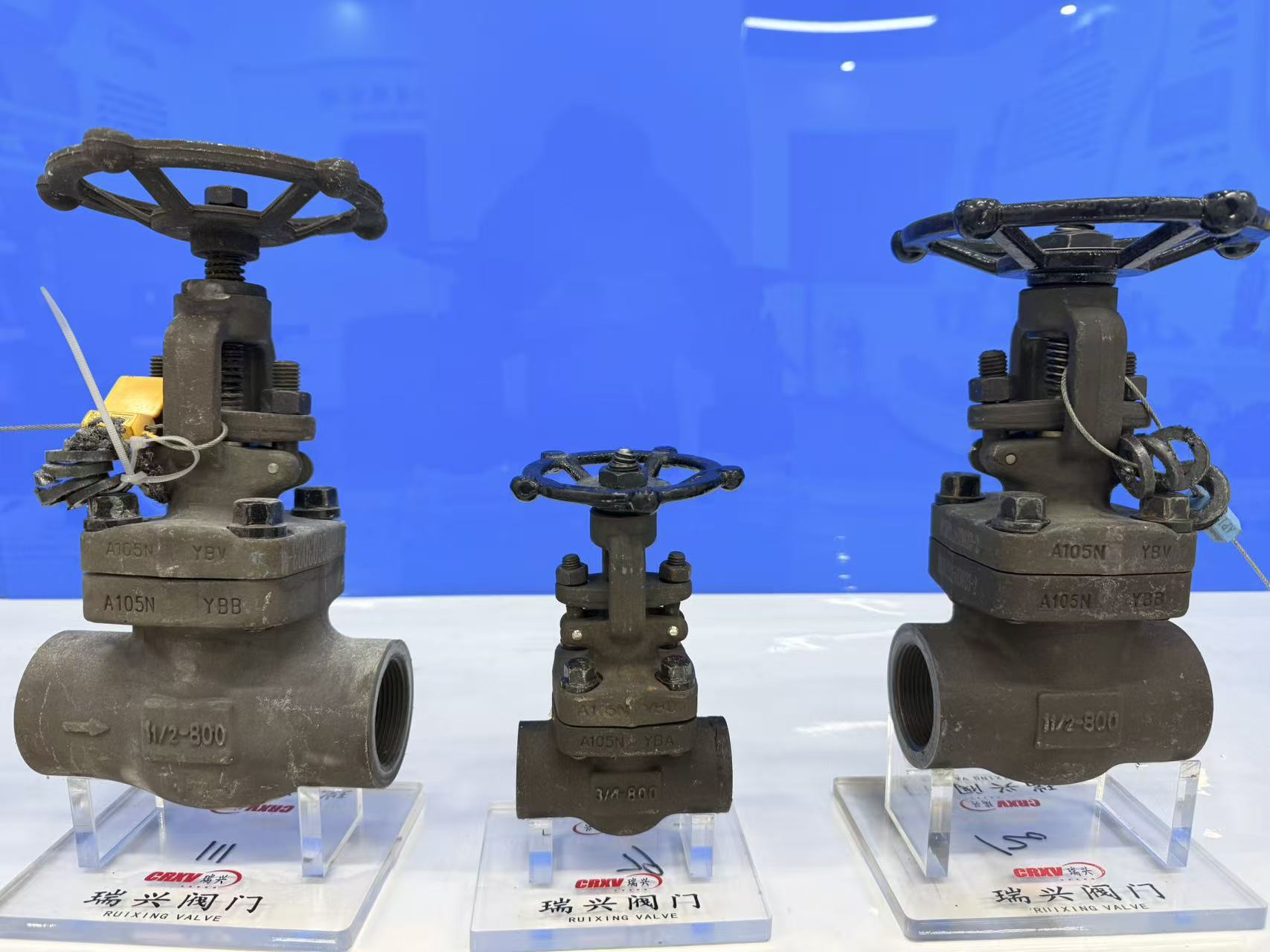
Standard catalog gate valves rarely survive in nonstandard service because core assumptions about sealing, thermal cycling, and flow behavior fall apart once the fluid or pressure envelope shifts. An application-specific design review forces the team to reconcile actual operating conditions—pressure transients, solids content, temperature swings—with the selected body-to-bonnet joint, seat geometry, and stem sealing arrangement. Skipping that step is how a valve passes hydrostatic testing in the shop but starts weeping at the seat after three field cycles.
Custom gate valves are typically purchased because the process pushes beyond what API 600 or B16.34 default assumptions cover. A proper design review examines whether the wedge should be solid, split, or flexible given the expected differential pressure and distortion during thermal events. It also challenges actuation sizing: the thrust required to unseat a gate can rise dramatically when the disc is loaded under full process pressure, yet generic torque tables often miss that peak. Without this review, a valve may operate smoothly on the bench but bind or stall once installed with an actuator.
Safety and environmental requirements also shift from one site to the next. A valve spec written for a refinery may be wholly inadequate in a chemical plant where low-emission packing standards differ, or where trace chlorides attack a standard trim alloy. Application-specific design reviews catch those mismatches before they become field failures—checking material certificates, fugitive emission test protocols, and even coating adhesion for buried or insulated service. The review is not an administrative formality; it is the difference between a valve that simply bolts to the flange and one that actually survives the process.
The Machining Tolerances That Decide Seat Tightness
Valve seat tightness rarely fails from a single bad dimension. It fails from the quiet stack-up of cylindricity drift, taper, and surface finish on the mating faces. A seat machined to a perfect bore diameter but with 0.015 mm of ovality will still leak under low pressure because the contact ring never fully closes. The tolerance that matters most is not the nominal size but the circularity and flatness across the seat width.
Radial runout between the seat bore and the guide bore is another silent killer. If the two axes are off by more than 0.05 mm, the valve head lands slightly tilted, concentrating force on one side. That uneven contact creates a micro-gap on the opposite side, enough for gas or fluid to creep through. Machinists control this by boring the guide and seat in the same setup, but even then, tool pressure and thermal drift can push the final cut out of tolerance.
Surface roughness also decides whether a seat seals or seeps. A turned finish with Ra 1.6 µm might pass a visual check, but under magnification the peaks and valleys leave tiny leak paths. Lapping or roller burnishing can bring the face down to Ra 0.2 µm, closing those channels. However, over-polishing is just as risky: a mirror-smooth seat with no oil retention can gall or stick, especially in high-cycle valves. The working tolerance is a narrow band, and holding it requires measuring the actual contact pattern, not just the blueprint numbers.
Protective Finishes That Prevent Corrosion Before It Starts
Rust doesn't wait for an invitation. By the time you notice that first blister or orange stain, the metal underneath has already begun to lose its structural integrity. The smartest approach isn't to fight corrosion after it appears—it's to stop it from ever getting a foothold. Protective finishes do exactly that, acting as a physical and chemical barrier between the metal surface and the corrosive elements that would otherwise attack it. Whether it's moisture in the air, road salt, industrial chemicals, or just the slow oxidation that comes with time, a well-chosen finish can shut down the reaction before it starts.
The key is choosing the right finish for the environment. A thin coat of paint might suffice indoors, but outdoor structures near coastal areas demand something far more robust—epoxy primers, zinc-rich coatings, or hot-dip galvanizing. Each works differently: zinc sacrifices itself to protect the steel beneath, while epoxy forms an impenetrable seal that moisture simply can't breach. Powder coating offers another path, fusing a durable polymer layer directly onto the metal surface through heat. These aren't just cosmetic touches; they're engineered barriers that actively prevent the electrochemical reaction we call rust.
What often gets overlooked is the preparation beneath the finish. Even the best coating will fail if the metal isn't properly cleaned and profiled first. Abrasive blasting removes existing corrosion and creates a rough surface for the finish to grip, while chemical pretreatments can passivate the metal and add another layer of defense. When done right, a protective finish doesn't just delay corrosion—it can extend the life of a metal component by decades, reducing maintenance costs and preventing the kind of sudden failures that catch people off guard.
What a Reliable Pressure Test Should Actually Cover
A reliable pressure test goes far beyond simply pumping up a system and watching a gauge for a few minutes. It must account for every connection, valve, blind flange, and temporary fitting that could mask a small leak or create a false reading. Temperature compensation is often overlooked: even a few degrees of change in the test medium or ambient air can shift pressure significantly, making a failing joint appear tight or a sound system look like it’s losing pressure. Using calibrated gauges at multiple points, rather than relying on a single instrument, helps catch localized pressure drops that would otherwise go unnoticed.
Equally important is the sequence and duration of the test. Reliable procedures include a staged pressurization—holding at intermediate levels before reaching full test pressure—so that weak spots can reveal themselves gradually instead of failing catastrophically. The hold time must be long enough to detect slow seepage through micro-cracks or weeping gaskets, not just gross ruptures. Documenting every step, from initial fill and venting to final depressurization, along with ambient conditions and gauge readings, creates a defensible record that separates a genuine pass from a rushed assumption.
How to Evaluate an OEM's Process Documentation and Traceability
Start by asking for actual production records, not just policy binders or ISO certificates. A reliable OEM should be able to pull a recent batch record and walk you through how raw material lots, equipment settings, operator sign-offs, and test results all tie back to a single serial number. If that link isn't immediate or the record shows unexplained gaps, treat it as a red flag rather than a documentation oversight.
Look closely at revision control and how the OEM logs deviations. You want to see evidence of what changed, why it changed, and who approved it, with dates and signatures attached. A document library full of static PDFs with no version history won't help you when a field failure needs to be traced back months later. Ask for a specific example of a recent process change and have them show you the full paper trail from proposal to implementation.
Finally, check whether traceability extends beyond final assembly to include purchased components and subcontracted steps. Many OEMs only track their own work, leaving supplier materials as a blind spot. A practical test is to request a mock recall simulation: give them a component lot number and ask them to identify every finished unit that used it within a day. If they can't produce that list quickly and completely, the traceability system is more decorative than functional.
FAQ
Material selection usually comes down to the service environment rather than just cost. Carbon steel grades like ASTM A105 or A350 LF2 work well for standard oil and gas duties, while stainless grades such as F316 or duplex F51/F53 are selected for corrosive or chloride-bearing streams. A responsible manufacturer will ask about operating temperature, pressure, and media composition before recommending a grade, because the wrong chemistry can lead to premature cracking or erosion even if the valve passes initial hydrotesting.
Forging compresses the steel grain structure along the shape of the body and bonnet, which reduces internal voids and gives the component better fatigue resistance than a casting. Closed-die forging also allows tighter dimensional control, so machined seating areas and stem bores stay more stable over repeated cycles. In high-pressure or high-cycle services, that grain flow direction can be the difference between a valve that lasts ten years and one that fails at a weld neck or rib.
Besides basic size and pressure class, buyers should confirm the end connection type, bore configuration, stem design, packing system, and any special seat or disc requirements. For example, a full-bore forged gate valve for pipeline pigging needs different internal geometry than a reduced-bore valve for isolation duty. Operating torque, gear operator clearances, and orientation of the handwheel also need to be locked down early so the final assembly fits the installation without field modifications.
A dependable manufacturer will run positive material identification on incoming forgings, check heat numbers against mill certificates, and inspect critical dimensions after each machining stage. Pressure testing should follow a defined procedure such as API 598 or ISO 5208, with both shell and seat tests recorded for every valve. Additional checks like hardness mapping, dye penetrant or ultrasonic testing on weld ends, and stem straightness verification help catch problems that a simple visual inspection would miss.
The trim choice starts with the disc seating surfaces and stem. Hardfacing with Stellite or tungsten carbide overlays is common for abrasive or high-temperature applications, while electroless nickel plating works well for sour gas or mildly corrosive fluids. Coatings on the body interior and exterior may also be required, but they need to be compatible with the forging material and the service temperature. A good OEM will provide test coupons or documented application procedures instead of just listing a coating trade name.
At minimum, expect a material test report for each pressure-containing forging, a pressure test certificate, and a final inspection report with actual dimensional data. For critical applications, buyers often request an inspection and test plan approved before production, weld procedure qualifications for any fabrication, and calibration certificates for test gauges. Traceability from heat number to final serial number is non-negotiable when the valve will go into a code-stamped pressure system.
These standards govern dimensions, pressure-temperature ratings, and minimum wall thickness for forged steel gate valves. A manufacturer that has produced valves to API 602 understands the limitations on body-bonnet joint design, stem retention, and seat leakage classes. If the shop is only used to generic industrial valves, they may overlook small but critical details like the required depth of engagement for threaded ends or the proper marking format, which can cause rejection during third-party inspection.
The fastest path is often to use standard forging stock and focus customization on machining, trim, and testing rather than requesting a fully bespoke forging die. Buyers can also reduce delays by providing complete specifications up front and approving the inspection and test plan before production starts. Batch ordering with staggered releases helps the manufacturer schedule furnace time and machining cells more efficiently, while still allowing each valve to be traced and tested individually.
Conclusion
The backbone of any custom forged steel gate valve is the forging itself. Poor grain flow or hidden laps in the body will eventually crack under thermal cycling, no matter how well the rest of the valve is machined. That's why serious OEMs start with a design review tied to the actual service conditions: pressure class alone won't tell you whether the seat angle needs to change for slurry or high-cycle steam. Once the forging is approved, the real fight for tightness happens at the machining stage. Wedge guide slots, seat pocket concentricity, and stem bore alignment have to be held within a few thousandths of an inch. If those tolerances drift, even a lapped wedge won't seat evenly, and you'll see leaks long before the valve reaches its rated life.
Corrosion protection is too often treated as an afterthought, but a phosphate-free epoxy base coat with a zinc-rich primer can stop pitting before the valve ever hits the pipeline. Then comes the pressure test, which should go beyond a simple shell test at 1.5 times rated pressure. A trustworthy OEM will also run a backseat test, a low-pressure air seat test on both sides, and often a fugitive emissions check on the stem packing. None of that matters if the mill certificates and heat-treat records don't line up with the actual parts. Ask for full traceability from heat number to final assembly, including NDE reports for the forging. If the documentation is vague or photocopied beyond recognition, walk away—it usually mirrors what's hidden inside the metal.
Contact Us
Contact Person: TIM
Email: [email protected]
Tel/WhatsApp: 8615857807381
Website: https://www.crxv.com/en/