

How TIJ Inkjet Printer Makers Are Revolutionizing Industrial Printing
2026-05-15
Industrial printing is undergoing a quiet revolution, and TIJ (thermal inkjet) technology is at the heart of it. Gone are the days of clunky, slow, and inflexible marking systems—today's compact yet powerful TIJ printers are redefining what's possible on production lines. From high-resolution barcodes to vibrant, variable data, they deliver precision at astonishing speeds. But what's really driving this shift? It's the relentless innovation from specialized manufacturers like Danmajet, who are pushing the boundaries of ink formulation, printhead design, and seamless integration. In this post, we'll peel back the layers of how these pioneers are tackling real-world challenges—think harsh environments, diverse substrates, and the demand for sustainable solutions—and why it matters for the future of manufacturing. Get ready to see TIJ in a whole new light.
Redefining Marking and Coding: The TIJ Advantage
Thermal Inkjet technology is quietly reshaping what’s possible in industrial marking, leaving behind the limitations of older methods. Unlike continuous inkjet systems that rely on pressurized ink streams and complex maintenance routines, TIJ operates with precision cartridges that jet ink only when needed. This on-demand approach eliminates the mess of solvent-based inks and the frequent nozzle clogs that plague other technologies. The result is a cleaner, more predictable process that fits seamlessly into modern production lines, whether you’re coding expiration dates on food packaging or printing barcodes on pharmaceutical cartons.
What truly sets TIJ apart is its ability to deliver high-resolution prints at production speeds without sacrificing simplicity. The cartridges snap into place like those in a desktop printer, yet they produce crisp alphanumeric codes, intricate 2D Data Matrix symbols, and even small logos with remarkable edge definition. Because the system is digitally driven, changeovers between batches happen in seconds—just load a new design, not a fresh set of consumables. This agility slashes downtime and reduces operator intervention, making it a natural fit for facilities chasing leaner workflows and greater uptime.
The hidden advantage lies in its environmental and ergonomic footprint. With no hazardous solvents to vent or dispose of, TIJ systems sidestep the ventilation and compliance headaches common to industrial printing. The cartridges are typically recyclable, and the water-based inks are far gentler on both operators and substrates. This subtle but powerful shift aligns with growing demands for sustainable production without compromising the durability or adhesion needed for product coding that lasts through supply chain rigors.
Bridging Analog and Digital with Smart Integration
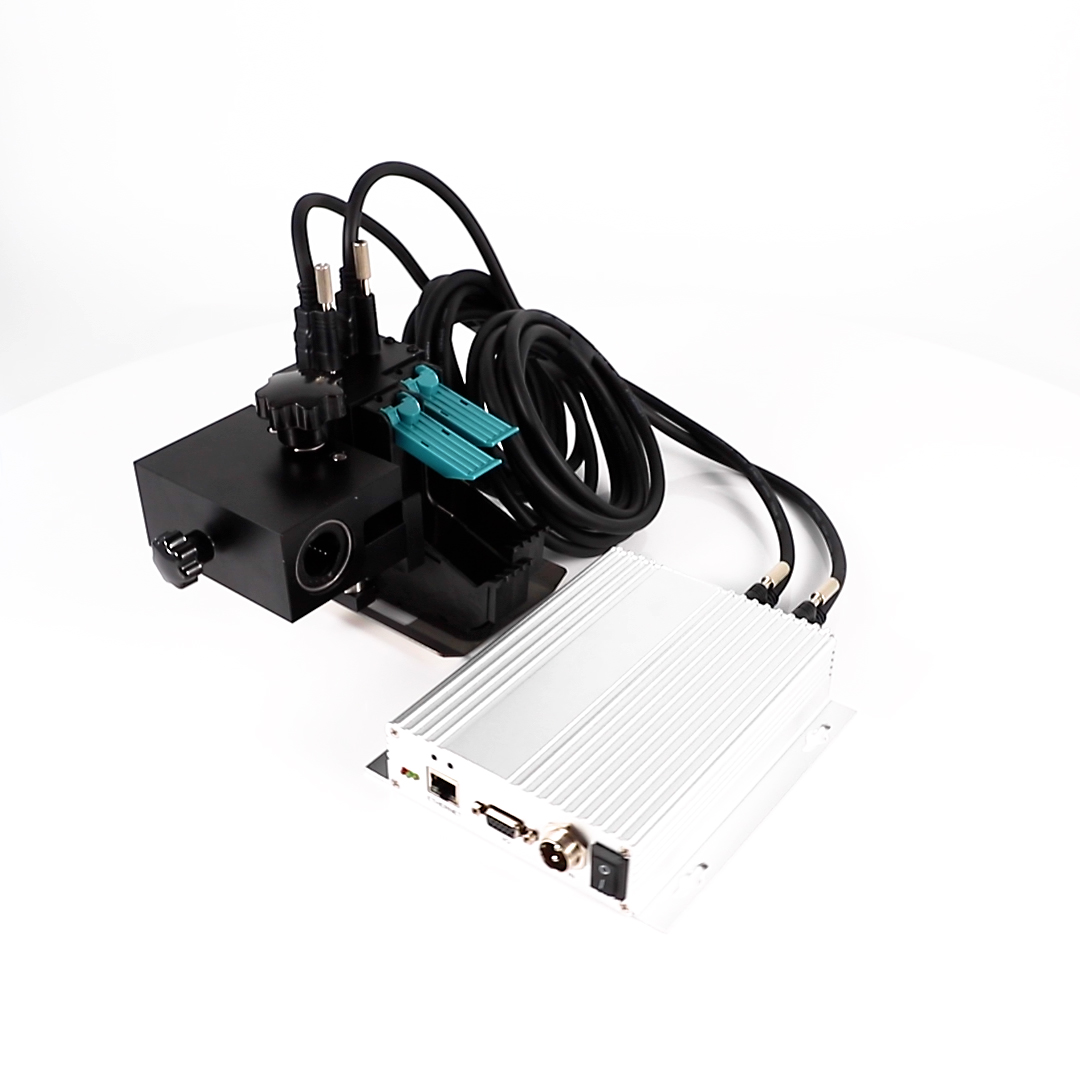
The line between physical and digital worlds continues to blur, and smart integration stands at the crossroads, translating tactile experiences into responsive digital actions. Rather than treating analog and digital as separate realms, the goal is to weave them into a single, intuitive fabric where a handwritten note can trigger a smart home routine or a sketch becomes the blueprint for a 3D model. This synergy depends on thoughtful design that respects the nuance of analog inputs while leveraging the speed and adaptability of digital processing.
At the heart of this bridge lies embedded intelligence—small, context-aware systems that interpret analog signals without overwhelming the user. Sensors and edge computing work quietly in the background, recognizing patterns in pressure, motion, or even chemical changes, translating them into meaningful digital outcomes. The magic happens when this translation is invisible, allowing people to stay immersed in the physical moment while the digital layer reacts and adapts in real time.
Ultimately, bridging these two worlds isn't about replacing one with the other, but about creating a dialogue between them. A well-integrated system honors the warmth of analog objects while enabling new possibilities—from educational tools that respond to touch and gesture, to wearables that learn from the body's subtle rhythms. The result is an ecosystem where technology fades into the background, and human expression remains central.
Beyond Packaging: Unconventional Industrial Applications
When most people think of industrial packaging materials, their minds jump straight to boxes and bubble wrap. But these sturdy, often high-performance materials have quietly found their way into entirely different roles. From heavy-duty fabrics woven from polypropylene tapes that reinforce coastal erosion barriers, to advanced polymer foams cushioning sensitive electronics in autonomous drones, the leap from containment to core functional component is more common than you’d expect.
In construction, discarded bulk bags are being shredded and transformed into erosion-control blankets that outperform traditional straw mats in durability and moisture retention. Meanwhile, the automotive sector has been experimenting with corrugated plastic sheets—normally used for signage or temporary floor protection—as lightweight, water-resistant liners for trunk compartments and door panels. These repurposed materials often bring unexpected benefits: reduced weight, lower cost, and resistance to chemicals that standard textiles simply can’t match.
Even the energy sector gets in on the action. Thick, UV-stabilized polyethylene films, originally designed to wrap industrial equipment for ocean transport, are now being deployed as makeshift pond liners for algae biofuel cultivation. Their flexibility and resistance to punctures make them ideal for irregular terrain, while the low cost allows startups to scale pilot projects without breaking the bank. It’s a reminder that packaging—when you strip away the label—is really just materials science waiting for a second act.
Breaking the Speed Barrier Without Sacrificing Quality
Many believe that faster work inevitably leads to sloppy results, but the truth is more nuanced. When you refine your workflow and cut out unnecessary steps, speed and precision can coexist. It’s not about rushing—it’s about building momentum through smarter tooling and clear priorities. The key is to identify bottlenecks that slow you down without adding real value, then replace them with streamlined processes that maintain rigorous standards.
One practical approach is to leverage automation for repetitive tasks while reserving manual oversight for decisions that demand human judgment. For instance, using pre-tested templates or scripts can drastically reduce mundane work, leaving more mental bandwidth for creative problem-solving. Quality checks embedded throughout the pipeline catch errors early, preventing speed-induced defects from reaching the final stage. This integrated method ensures that acceleration doesn't come at the cost of excellence.
Team culture also plays a pivotal role. When everyone agrees on explicit quality criteria and a shared definition of "done," rapid iterations become possible without endless rework. Frequent, small feedback loops keep the momentum high and mistakes minimal. Ultimately, breaking the speed barrier is about designing systems where speed and quality reinforce each other, transforming what once seemed like a trade-off into a sustainable advantage.
Invisible Shifts: How TIJ Enhances Traceability and Compliance
Thermal Inkjet (TIJ) technology is quietly transforming how industries manage traceability and compliance, often without drawing attention to itself. Unlike traditional marking methods that rely on consumables and frequent maintenance, TIJ delivers high-resolution codes directly onto products and packaging. This capability allows manufacturers to embed detailed, machine-readable data such as batch numbers, expiry dates, and unique identifiers with far less effort. The result is a seamless integration into existing production lines, where every item can carry its own distinct fingerprint without slowing down output or demanding extra resources.
The real advantage lies in TIJ’s ability to produce consistently sharp, legible prints that hold up throughout the supply chain. Compliance requirements across sectors like pharmaceuticals, food, and electronics demand more than just marking—they demand clarity that automated systems can capture without errors. TIJ meets this by generating crisp 2D codes and alphanumeric strings that remain readable even on curved or uneven surfaces. This reduces the risk of recalls, fines, or rejected shipments caused by illegible markings, while strengthening the chain of custody for every item that leaves the factory floor.
Beyond the surface, TIJ fosters a level of traceability that feels invisible precisely because it works so smoothly. It enables data-driven decisions without adding layers of complexity. As regulations tighten and consumer expectations rise, companies adopting TIJ find themselves more agile in audits and better prepared for product recalls. The shift isn't just about printing—it's about building trust into the very fabric of production, one drop of ink at a time.
Sustainability Through Precision: Reducing Waste in Production Lines
Precision in manufacturing often gets framed as a quality or speed issue, but its role in reducing material waste is equally transformative. When production lines operate with tighter tolerances and smarter feedback loops, the margin for error shrinks—fewer off-spec parts mean less scrap headed to landfills. This kind of waste reduction isn't just a cost-saving measure; it directly lowers the environmental footprint of each unit produced, turning efficiency into a tangible sustainability lever.
Advanced sensor systems and real-time analytics now allow lines to self-correct before a defect cascades into a batch of waste. Think of a filling station that adjusts nozzle pressure mid-cycle to prevent overpouring, or a cutting tool that sharpens itself based on wear predictions rather than a preset schedule. These micro-adjustments accumulate, slashing raw material consumption without sacrificing output. The environmental payoff is immediate and measurable: less water, chemicals, metal, or plastic going into the bin and eventually the ecosystem.
Beyond technology, the shift toward waste-conscious production also reshapes operator mindsets. When teams see granular data on how much material they save through precise adjustments, continuous improvement becomes a shared mission instead of a top-down directive. This cultural embedding of precision-as-waste-reduction ensures that sustainability isn't a one-time project but an ongoing habit, baked into daily operations and long-term planning alike.
FAQ
Thermal inkjet uses tiny heating elements to vaporize ink and create a bubble that propels droplets precisely onto a surface. Unlike continuous inkjet, which constantly circulates ink and deflects drops electrically, TIJ fires drops only when needed. That means simpler maintenance, no messy ink recovery systems, and a much smaller footprint—ideal for integrating directly into production lines without the overhead.
The shift isn't sudden—it's been building as printhead technology matured. Early TIJ couldn't handle the speeds or rugged conditions of factories. Now, with faster firing frequencies, robust inks that cure under UV or bond to non-porous materials, and smarter electronics, TIJ can match or beat older industrial printers on quality while being far easier to scale and maintain.
Packaging and coding are huge: printing expiration dates, barcodes, and QR codes on flexible packaging, bottles, and cartons. But we're also seeing them in direct-to-shape printing on cylindrical objects, pharmaceutical blister packs, and even textile tagging. Because TIJ heads are compact, they can be arranged in arrays for wide-format printing on assembly lines.
CIJ systems need constant attention—solvent top-ups, cleaning of deflection plates, filters, and pumps. TIJ cartridges are largely self-contained: you replace the whole head when it wears out, and between swaps there's almost zero user intervention. Over a year, factories report 30–50% lower consumable costs and far less downtime due to clogs or cleanup.
That used to be the knock against TIJ, but recent solvent-based and UV-curable inks have shattered that barrier. Some formulations now bite into polypropylene and even untreated metals without primers. With the right pre-treatment or inline curing, adhesion is no longer an afterthought; it's engineered into the ink from the start.
It depends on the resolution and imprint size, but today's top TIJ heads can fire at over 100 kHz with drop volumes as small as 3 picoliters. When you gang multiple heads together, you can print at 300 meters per minute at 600 dpi—easily keeping up with beverage canning lines. The real bottleneck is often drying or curing, not the jetting itself.
We're seeing cartridges designed for spot varnishing, conductive inks for printed electronics, and even edible inks for direct food decoration. Some makers are experimenting with recirculating TIJ heads that prevent pigment settling, opening doors to heavier pigmented whites and metallic inks that were once CIJ-only territory.
Conclusion
Thermal inkjet (TIJ) technology is quietly reshaping industrial printing, moving far beyond its office origins. Manufacturers are now leveraging TIJ’s precision to redefine marking and coding on production lines, enabling crisp, high-resolution prints on everything from flexible packaging to curved metal parts. By bridging analog workflows with digital intelligence through smart integration—like connecting printers directly to enterprise systems—operators gain real-time control and rapid job changeovers without manual intervention. This seamless fusion of hardware and software not only boosts efficiency but also unlocks unconventional applications, such as printing on medical devices or automotive components, where reliability and compliance are non-negotiable.
Meanwhile, TIJ’s ability to sustain high speeds without sacrificing print quality is breaking traditional throughput barriers, allowing manufacturers to keep pace with demanding lines. Beneath the surface, this technology drives invisible shifts: every dot can encode traceable data, from batch numbers to unique digital watermarks, bolstering product authentication and regulatory adherence. Sustainability wins come naturally, as precision jetting minimizes ink waste and eliminates the need for excessive consumables, trimming both environmental footprint and operational costs. In essence, TIJ printer makers aren’t just upgrading a tool—they’re transforming industrial printing into a smarter, cleaner, and more agile pillar of modern production.
Contact Us
Contact Person: Jacky
Email: [email protected]
Tel/WhatsApp: 086 15000607053
Website: https://www.danmajet.com