

Hybrid Servo Press Brake Factory: Precision Manufacturing for Modern Metal Forming
2026-10-08
Walk through any modern fab shop and you’ll hear the same three gripes about press brakes: thermal drift, energy waste, and slow setup. Hybrid servo technology attacks all three at once. At HUNSONE, that technology isn’t just bolted on—it’s built into the factory floor, from frame machining to final calibration. This post explains why that matters for precision metal forming.
Hybrid Servo Assembly, Minus the Noise
Most servo assemblies have a way of announcing themselves with every move—a sharp whine here, a metallic grind there. Hybrid designs take a different route. By blending materials with different damping properties and rethinking the mechanical coupling, these units cut the harsh edge off motion control. The result is a system that works almost inaudibly, even under rapid acceleration or load changes.
The key isn't just adding a rubber washer and calling it a day. Engineers attack the noise at its source: gear tooth profiles are modified to reduce impact, rotor balancing minimizes vibration, and the drive electronics shape current waveforms to avoid abrupt torque spikes. That combination keeps the assembly quiet without sacrificing the responsiveness that precision applications demand.
In practice, this means you can put a hybrid servo right next to a microphone, a hospital bed, or a laboratory bench and forget it's there. No more building bulky enclosures or scheduling noisy cycles for off-hours. The machine just does its job, and the room stays calm—which is exactly what you want when the noise floor matters as much as the motion itself.
Micron-Level Bends Without the Guesswork
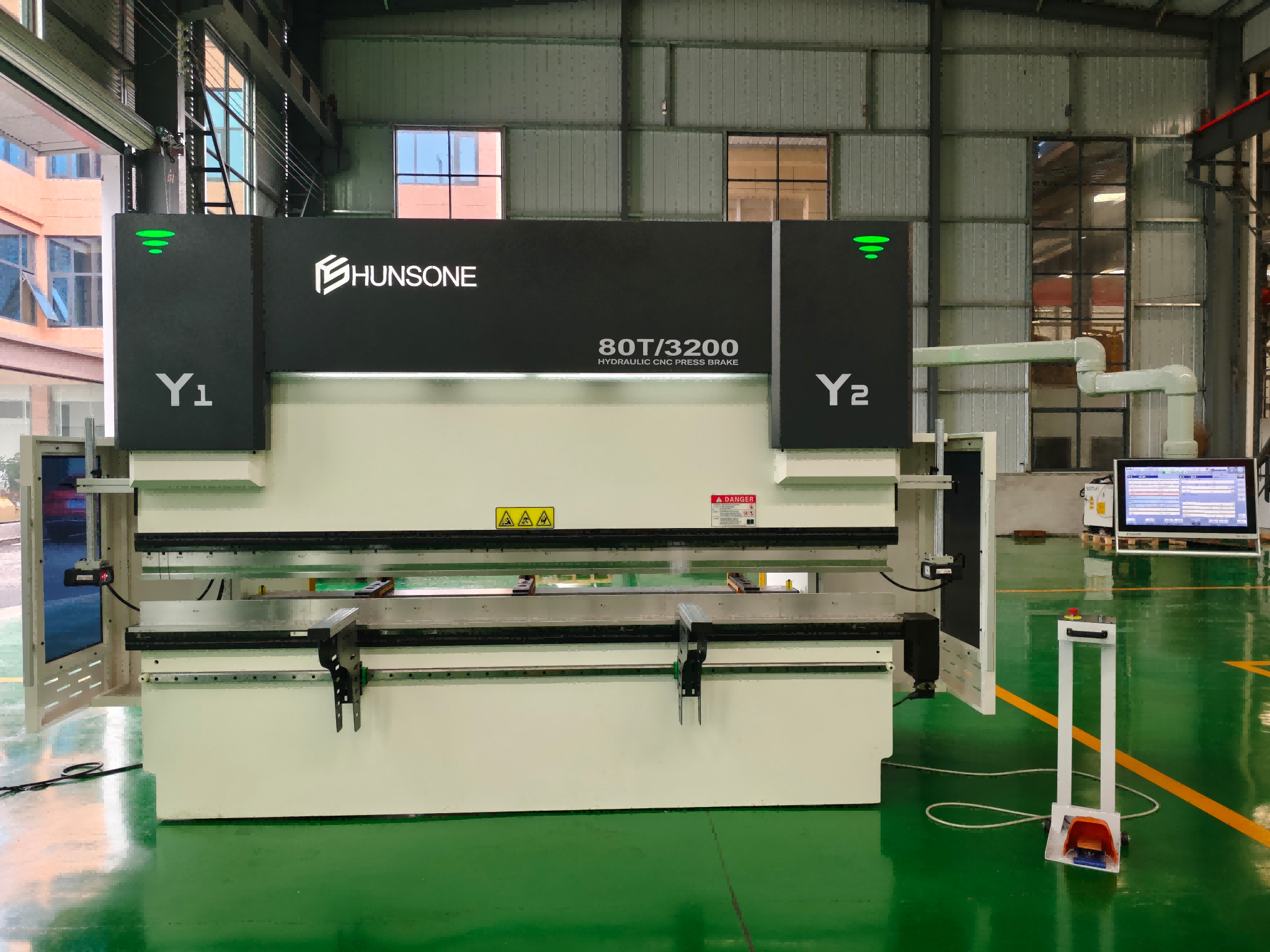
When a bend tolerance is measured in microns, the margin for error is nonexistent. Traditional methods often rely on trial runs, operator intuition, or adjusting after a failed first piece. That approach produces scrap, delays, and inconsistent results across batches. The alternative is to replace guesswork with direct feedback from the material itself. By using in-process measurement of bend angle and material springback, the press brake knows exactly when the target angle has been reached, not when it has been approximated. This closes the loop between the intended geometry and the actual formed part, cycle after cycle.
One of the biggest hidden variables is springback, which shifts from coil to coil even within the same alloy and thickness. A fixed punch depth cannot account for that drift. Instead, the control system must sample the real bending force and angle just before the final forming stage, then calculate the required overbend for that specific workpiece. This removes the need to compensate manually or to keep a library of correction factors that are already outdated by the next material lot. The result is a process where the first part off the machine is as accurate as the thousandth.
The practical impact shows up in assembly and downstream welding. When every bend lands within a few microns of nominal, mating parts fit without rework, gaps close predictably, and fixtures stop needing constant adjustment. Operators no longer spend time measuring, tweaking, and remeasuring. They load a blank, start the cycle, and trust that the bend is correct. That trust is not built on hope or habit—it comes from a control strategy that measures what the material is actually doing, not what a lookup table says it should do.
Where Hydraulic Muscle Meets Electric Precision
Heavy machinery has long relied on brute hydraulic force to push, lift, and crush—but raw power alone can be clumsy. Pair that muscle with the split-second control of electric actuation, and you get a system that knows exactly how hard to press and when to back off. This isn't a compromise between strength and accuracy; it's a deliberate fusion where each half covers the other's blind spots.
Imagine a press brake that can form delicate sheet metal in the morning and punch through thick plate by afternoon, all because the electric drive meters every millimeter of the hydraulic cylinder's stroke. The fluid still does the heavy work, but the electronics decide the pace, the position, and the pause. The result is less overshoot, fewer rejected parts, and a machine that feels responsive rather than rigid.
What makes this blend stand out is how it changes the operator's relationship with the equipment. Instead of wrestling with lag and guesswork, you set a value and watch the system hit it without drama. Maintenance intervals stretch out too, since electric inputs reduce stress on seals and valves. It's not about abandoning hydraulics—it's about giving them a sharper mind.
One Factory Floor, Hundreds of Repeatable Setups
Walking onto the floor, you notice the absence of frantic retooling between jobs. Each station has a labeled home for every jig, fixture, and torque setting. The real difference is that setups are treated like recipes—stored digitally, versioned, and recalled with a scan. A line that stamped brackets in the morning can be assembling enclosures after lunch, not because someone improvised, but because the exact sequence was already proven and waiting.
That repeatability comes from modular thinking. Machines aren't hard-wired to a single product; they're built around standard interfaces for quick-change tooling, programmable clamps, and parameter files that live with the part number. When a new order arrives, the operator pulls the corresponding setup package from the library. Every detail—from coolant flow to conveyor speed—loads automatically, leaving little room for guesswork.
The result isn't a chaotic pile of hundreds of configurations. It's a searchable, logical catalog where each setup has a place. Training shrinks because the logic is consistent across lines. Downtime drops because changeovers happen in single-digit minutes. And when a setup fails or could be better, the fix is made once and pushed to every shift, keeping the floor in a state of controlled, repeatable motion.
Tooling Choices That Keep Angles Consistent
A lot of angle drift comes from the tooling, not the operator. If you're using a mill vise with jaws that lift, or a bandsaw table that flexes under feed pressure, you'll chase the same half-degree error all day. Swap in a set of matched angle blocks, a solid sine plate, or even a simple fixture with hardened pins—anything that locates the part the same way every time. Rigidity and repeatability in the setup do more for consistency than re-measuring after every pass.
Cutting tools matter just as much. A dull end mill or a hand-sharpened lathe bit with uneven relief will push the workpiece sideways, especially on light cuts where deflection hides the error. Choosing a tool with predictable geometry and keeping it sharp removes that sideways force. Once the clamping and cutting forces stay balanced, the angle you dial in is the angle that stays.
Stress Testing Metal for Predictable Bends
Bend predictability comes from watching how a metal fails, not just from the spec sheet. You can cut ten coupons from the same batch of cold-rolled steel and still see one split early if the grain direction is off, or if the edge has micro-cracks from shearing. A simple three-point bend test tells you more than tensile data alone, especially when you track springback angle and the point where surface cracking begins.
Most shops treat stress testing as a pass/fail gate. That misses the useful part. Repeated bending at slightly increasing angles maps out the material's comfort zone, and you learn to read the fracture surface: a dull, grainy break means a ductile failure, while a bright, granular snap points to fatigue or hardness issues. Once you know those signals, you can adjust die clearance, bend radius, or heat treatment before a bad bend reaches production.
The goal is not to force a metal to obey a radius, but to find the smallest radius it will accept without losing strength. That kind of testing feels slow until it saves you from scrapping a full run of brackets or frames. It also builds a local library of behavior for the alloys you actually stock, which beats any generic chart.
FAQ
The hybrid servo drive pairs a servo motor with a hydraulic pump, so ram position and speed are controlled electronically rather than through valve throttling. That removes lag and overshoot during bending, holding the bend angle within a tighter tolerance across long production runs. Operators see repeatable results even on high-tensile sheet metal, because the machine compensates for deflection and oil temperature changes in real time.
It fits shops that work with stainless steel enclosures, automotive brackets, aerospace structural panels, and electrical cabinets. Thin-gauge aluminum and pre-painted sheet also come out without surface marring because the ram dwell and speed can be tuned per material. Job shops handling mixed batches get the biggest advantage: they can switch from a 0.8 mm aluminum cover to a 6 mm steel gusset with minimal setup time.
Yes, the servo-hydraulic system maintains a stable oil temperature and flow, which keeps the Y-axis repeatability consistent over an eight-hour shift. The factory also builds in a crowning table that adjusts automatically for deflection, so parts stay flat and angles stay consistent from the first piece to the last.
Each press brake is assembled on a stress-relieved frame, then tested with a laser interferometer and a test bend coupon. The factory verifies ram parallelism, back gauge positioning, and angular accuracy under full tonnage. Any deviation beyond the stated tolerance triggers rework or part replacement before crating.
Because the servo motor only runs when the ram needs to move, idle power draw drops sharply compared to a fixed-speed hydraulic pump. Oil volume is smaller, so filters and seals last longer. Shops often report lower cooling load in the shop and quieter operation, which makes the machine easier to place near other workstations.
The CNC back gauge uses ball screws and linear guides driven by AC servo motors, with multiple axes available depending on the model. It can position the sheet within a few hundredths of a millimeter, and the controller stores bend sequences so an operator can recall a whole job with offsets for springback already applied.
The factory can integrate automatic tool changers, follow-up sheet supports, and robot loading and unloading stations. Bed length, tonnage, and open height are sized to the customer's largest part, not just a standard catalog number. That means a buyer can get a machine tailored to a specific product family like server racks or trailer side panels.
Engineers from the factory help with installation, leveling, and first article approval. They train operators on bend programming, tool setup, and maintenance routines. Remote diagnostics and spare parts kits are also offered, so a shop can resolve most issues without waiting for a field visit.
Conclusion
Walking through the hybrid servo press brake factory, the first thing you notice is what’s missing: the usual hydraulic hiss and clatter. Motors engage only when the ram moves, so idle periods are almost silent and energy draw drops sharply. That calm carries into the bending itself. The hybrid drive blends raw hydraulic muscle with electric servo control, letting the beam hold position within microns while still delivering full tonnage when a thick plate needs to move. Operators don’t chase angles by feel or repeated test bends. They pull up a stored recipe, and the machine returns to the same depth, dwell, and crowning every time. On the floor, rows of these brakes run hundreds of setups a day, switching from thin stainless to heavy mild steel without losing repeatability.
Tooling choices matter just as much as the drive system. The factory keeps a matched set of punches and dies for common profiles, and each tool is checked for wear so the angle stays consistent across long batches. Before any production run, samples are stretched and bent on a small test rig to map springback and grain direction. That data feeds back into the controller, turning what used to be guesswork into a predictable offset curve. Even when a new operator steps in, the bend is the same as the one made at 6 a.m. The result is not just tighter parts but fewer scrapped blanks and a smoother handoff from press brake to welding or assembly. In a modern metal forming shop, that kind of quiet precision is what keeps a factory competitive.
Contact Us
Contact Person: James Chen
Email: [email protected]
Tel/WhatsApp: 86 13770803946
Website: https://www.hunsone.com/