
Import Warehouse Racking: Smart Storage Solutions for Global Supply Chains
2026-08-07
In today’s fast-paced global supply chains, the efficiency of import warehouses often spells the difference between profit and bottleneck. While many focus on logistics software and shipping speeds, the backbone of a truly agile operation lies in its physical infrastructure—specifically, its racking systems. Here’s where Lanyuda redefines the game, offering smart storage solutions that don’t just hold inventory but actively streamline workflows. Think beyond static shelves and consider what happens when every square foot of your warehouse works as hard as you do. This article unpacks how the right racking choices can transform your import operations, reduce handling times, and scale with your ambitions.
Racking That Adapts as Shipments Swell
When order volumes surge unexpectedly, fixed racking systems quickly become a bottleneck. Adjustable racking solutions step in to handle the pressure, allowing warehouses to reconfigure layouts on the fly without disrupting ongoing operations. Teams can add extra tiers, widen aisles, or shift staging areas in hours rather than days, keeping pace with demand spikes without sacrificing safety or accessibility.
This flexibility proves invaluable during seasonal peaks or flash sales, where the ability to scale storage density by up to 40% without permanent structural changes translates directly into faster turnaround times. Components lock into place securely yet can be released with simple tools, making it possible to transition from bulk storage to pick-ready slots by the next shift. The system grows with the business—not against it.
Behind the scenes, telemetry sensors embedded in select rack modules track weight distribution and movement frequency, sending alerts before racks reach capacity. This data-driven approach means adjustments happen proactively, not reactively. The result is a warehouse that evolves in near real-time, maximizing every square foot while accommodating the unpredictable ebb and flow of modern fulfillment.
When Every Inch Counts in Bulk Storage
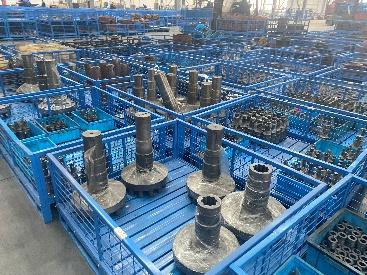
In tight warehouses or stockrooms, every square foot carries real operational weight. Bulk storage isn’t just about stacking more—it’s about making the most of vertical clearance, awkward corners, and narrow aisles that standard shelving leaves unused. A shift to high-density racking or modular bins can turn wasted overhead space into accessible inventory, often without expanding your footprint. The difference shows up quickly in picking speed and order accuracy when goods are arranged to use every available inch.
Think beyond the floor plan. Adjustable pallet racking, slim-profile containers, and tiered shelving let you shape storage zones around product dimensions rather than forcing everything into a one-size-fits-all layout. Even small tweaks—like nesting oddly shaped items or suspending slower-moving stock above active pick zones—eliminate gaps that quietly bleed capacity. The result isn’t just a tidier backroom; it’s a system that extends the life of your current space, postponing costly relocations or expansions.
What really matters is reclaiming the inches you never thought you had. Walls, column faces, and under-utilized mezzanine edges can host narrow racks or hanging storage for lightweight bulk items, turning dead zones into turnover. When you treat every vertical and horizontal plane as potential storage, you stop fighting for breathing room and start managing inventory flow with the space you already occupy—making cramped conditions feel surprisingly open and organized.
Smarter Picking Paths for Mixed-SKU Loads
Mixed-SKU orders in modern warehouses present a real puzzle. Unlike single-item picks, these loads combine items of different sizes, weights, and storage zones, making fixed routes wasteful. Workers often double back or zigzag through aisles when the sequence isn’t optimized, burning time and energy.
Smart pathing algorithms now treat each batch as a dynamic problem. They account for real-time inventory locations, item fragility, and even the physical dimensions of the cart. For instance, heavy items might get placed at the bottom of the pick list to stabilize the load early, while fragile goods are slotted later, reducing the chance of damage during travel. The system also factors in congestion patterns, avoiding busy zones during peak hours.
The result is a noticeable reduction in travel distance per order—often 20 to 30 percent less walking—and fewer errors from rushing. Pickers can move at a steady, predictable pace without chasing exceptions. For operations handling high mix, low volume, this adaptability keeps throughput consistent even during demand spikes, turning a chaotic floor into a coordinated flow.
Built to Handle Cross-Docking Surges
Cross-docking operations often experience unpredictable volume spikes, whether from seasonal demand, promotions, or sudden supply chain shifts. Our facility is engineered with these surges in mind, utilizing dynamic staging areas and automated sortation systems that seamlessly scale to absorb peak loads without bottlenecks. Instead of relying on rigid scheduling, we employ real-time throughput monitoring to adapt resource allocation instantly, ensuring every shipment moves with speed and precision regardless of volume.
The physical layout itself is a strategic advantage: extra-wide receiving bays and multiple flow-through lanes allow simultaneous unloading and loading of multiple trailers, drastically reducing dwell time. During surges, our intelligent conveyor routing coupled with a flexible workforce cross-trained in multi-functional roles keeps goods flowing smoothly, preventing the common pile-ups that cripple less prepared facilities. This design philosophy treats spikes not as exceptions but as expected events that the entire system is calibrated to handle.
Temperature-Controlled Zones Without the Cost Creep
Keeping products at the right temperature without draining your budget is less about fancy tech and more about smart setup. Simple things like arranging pallets so cold air can actually circulate, instead of hitting a wall of boxes, make a huge difference. Sealing gaps around dock doors with something as basic as brush strips stops your cooled air from walking out every time a forklift passes by.
Another quiet money saver is reevaluating how deeply you really need to freeze. A lot of facilities run their cold storage a few degrees colder than necessary “just to be safe,” but that tiny nudge can spike energy use by 8-10%. Fine-tune those setpoints and you’ll see the drop in the utility bill long before your products notice any change.
Also, watch out for the equipment you already have. Older fans and compressors tend to hum along way past their prime, drawing more power while delivering less. A modest upgrade—or even a retrofit with variable speed drives—often pays for itself faster than you’d think, especially when combined with off-peak cooling schedules that shift the heavy lifting to times when electricity rates dip.
Future-Proof Designs That Outlast Trade Shifts
The key to enduring design lies in its ability to adapt, not just to trends, but to the unpredictable currents of global trade. When supply chains fracture or tariffs reshape cost structures, products rooted in modular thinking and locally sourceable materials remain resilient. By decoupling aesthetics from transient availability, designers create objects that can be produced anywhere without losing their identity. This means moving away from over‐reliance on a single region’s craftsmanship and instead building systems where components can be swapped or manufactured in multiple locations. The result is a design language that speaks of permanence—not because it resists change, but because it absorbs it gracefully.
Another pillar of trade‐proof design is material agnosticism. Instead of designing around a specific, imported exotic wood or a patented composite, thoughtful creators craft forms that retain their character across a palette of alternatives. A chair, for instance, might be conceived in reclaimed oak in one market, bamboo in another, yet its silhouette remains instantly recognizable. This flexibility dissolves borders; the design becomes a global citizen, capable of being realized wherever demand exists. It also future‐proofs against resource scarcity, ensuring that a sudden embargo or duty doesn’t render the piece obsolete. Timelessness, then, is engineered through diversity of possibility rather than uniformity of specification.
Finally, designs that outlast trade shifts embed emotional durability through storytelling and cultural transcendence. Objects that resonate on a human level—evoking nostalgia, curiosity, or a sense of place—aren’t easily discarded when market conditions change. They accumulate meaning over time, becoming heirlooms rather than commodities. By grounding design in universal values like comfort, utility, and quiet beauty, creators build a buffer against economic turbulence. Such pieces aren’t just manufactured goods; they are vessels of continuity. In a world of constant disruption, the most radical act of future‐proofing is to make something worth keeping—regardless of where or how it was made.
FAQ
It's a specialized storage framework designed to handle high-volume international shipments, maximizing space and organizing goods for faster turnover in cross-border logistics.
They use automated systems and data-driven layouts to cut retrieval time, reduce errors, and keep inventory flowing smoothly across continents.
Adjustable beam levels, heavy-duty construction, and compatibility with diverse pallet sizes let companies adapt quickly to shifting trade volumes and mixed cargo types.
Absolutely. Most modern racking setups mesh seamlessly with warehouse management software and IoT sensors, giving real-time visibility into stock levels and movement patterns.
It's critical. Providers analyze shipment profiles, seasonal peaks, and future growth plans to tailor layouts, load capacities, and accessibility so the system evolves with your supply chain.
Yes—modular designs allow phased investments, while high-grade steel and protective coatings extend service life even in busy, high-impact import environments, lowering total ownership cost over time.
Conclusion
In today’s volatile global supply chains, import warehouse racking has evolved far beyond static shelving—it’s now a dynamic framework that can absorb sudden inventory surges without costly redesigns. Systems that adapt as shipments swell are essential for facilities handling fluctuating import volumes, where a single quarter might bring a 40% spike in palletized goods. Modular racking structures with telescopic beams and adjustable bay configurations let operators reconfigure storage density on the fly, turning standard bulk zones into high-rise selective racks within hours. These solutions don’t just accommodate growth; they actively shape workflow by integrating smarter picking paths for mixed-SKU loads, where split-case orders demand both speed and accuracy. By aligning pick-face layouts with real-time order profiles, warehouses can slash travel time while maintaining seamless cross-docking capabilities for time-sensitive imports that must move straight from receiving to outbound doors.
Beyond throughput, modern racking tackles two often-competing demands: space efficiency and specialized environments. Designs that maximize every vertical inch now incorporate temperature-controlled zones without the energy penalty that typically haunts cold storage retrofits—thin-profile insulated panels snap into standard racking frames, creating chilled lanes that share structural steel with ambient sections. This hybrid approach keeps cost creep at bay while preserving product integrity for perishable imports. Meanwhile, future-proof thinking runs through the entire installation. Materials like micro-alloyed steel and earthquake-resistant baseplates ensure the racking outlasts shifting trade patterns, tariff structures, and even seismic events. These aren’t mere storage units; they’re strategic assets that let import warehouses pivot from bulk holding to rapid sortation without structural overhaul, turning static space into a responsive supply-chain engine.
Contact Us
Contact Person: Johnny
Email: [email protected]
Tel/WhatsApp: +86 18151010686
Website: https://lydstorage.com