

New Type Vehicle Ozone Machine Revolutionizes Car Air Purification
2026-10-06
Your car's cabin might be hiding more than just dust—dashboard plastics, upholstery, and trapped moisture can release odors and harmful compounds that ordinary filters simply miss. Enter a new type of vehicle ozone machine that doesn't just mask smells but actively oxidizes them at the molecular level. Developed by LUFUTATECH, this compact device is redefining what it means to purify the air you breathe on every drive. Curious how ozone can eliminate stubborn contaminants without harsh chemicals? Read on to see why traditional air fresheners are becoming a thing of the past.
The Hidden Chemistry That Makes Ozone a Perfect Fit for Car Interiors
Most people assume that the smell of a new car comes from the plastics, leathers, and adhesives curing inside a sealed cabin. What they don't realize is that the real magic often happens at the molecular level, where trace amounts of ozone—generated either by ambient air or by dedicated devices—seek out and dismantle the volatile organic compounds responsible for that overpowering "new car" scent. Ozone's third oxygen atom is loosely bound and eager to react, breaking down long-chain hydrocarbons into smaller, less odorous fragments. This isn't just masking; it's a quiet, invisible chemistry that resets the cabin's atmosphere.
What makes ozone particularly suited to vehicle interiors is the way it moves through every crevice. Unlike liquid cleaners that can't reach behind dashboard panels or deep within seat foam, ozone behaves like a gas, diffusing into the same tight spaces where odors hide. It doesn't leave behind a wet residue or a floral perfume that eventually fades into something worse. Instead, it neutralizes the source and then dissipates, often within minutes, leaving a neutral baseline that lets the materials themselves breathe. For drivers who prefer a cabin that doesn't smell like a chemical cocktail, this property is a quiet game changer.
There's also a practical side: ozone treatment requires no scrubbing, no disassembly, and no downtime. A professional can run a controlled ozone generator inside a parked car, let it work through the ventilation system and upholstery fibers, and then air it out. Because the reaction is self-limiting—once the oxidizable compounds are spent, the excess ozone simply reverts to ordinary oxygen—there's no buildup to worry about. It's a rare case where the chemistry aligns perfectly with the messy reality of a car's interior, turning a sealed metal box into a cleaner, more honest space.
No More Air Fresheners: Why Ozone Breaks Down Odors at the Molecular Level
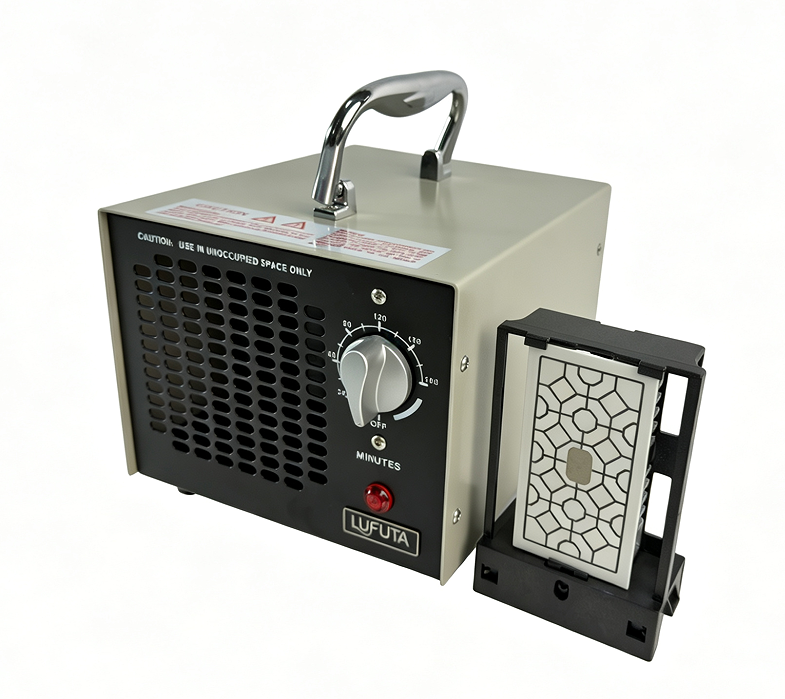
Most air fresheners don’t actually remove anything. They load the air with synthetic perfume molecules that temporarily overwhelm your nose, leaving the original odor lurking underneath. Ozone works on a completely different principle. As a highly reactive form of oxygen, O3 doesn’t mask smells—it hunts down the volatile compounds responsible for them. When an ozone molecule collides with an odor molecule, the extra oxygen atom snaps onto the odor’s carbon double bonds or sulfur groups, breaking the structure apart into smaller, often odorless fragments.
This oxidation happens at the molecular level, which means the source of the smell is chemically dismantled rather than covered up. For instance, the thiols and amines that give rotting food or stale smoke their punch get their bonds cleaved into simple molecules like carbon dioxide and water vapor. The ozone itself reverts to ordinary oxygen after the reaction, leaving no perfume residue or sticky film behind. That’s why professional restoration crews and car detailers rely on ozone generators after fires or biohazard cleanups—it neutralizes the odor instead of just postponing it.
There is a catch: at high concentrations, ozone can irritate lungs, so these treatments take place in unoccupied spaces with proper ventilation afterward. But when you compare the chemistry, it’s clear why a can of floral spray can’t compete. Ozone doesn’t add another layer to the air; it subtracts the problem. For anyone tired of cycling through air fresheners that fade within hours, understanding this molecular breakdown explains why the smell actually disappears—and stays gone.
The New Generation Fixes the Old Ozone Machine's Biggest Flaw
Older ozone machines shared a nagging problem: the ceramic plate that generates ozone would slowly degrade under high voltage. After a few months of regular use, output dropped sharply, and the unit sometimes began emitting a faint metallic smell. Replacing the plate was doable but annoying, and many people simply stopped using the machine.
The new generation reworks that core component. Instead of a constant high-voltage charge, these models pulse the current and automatically run a brief reverse-polarity cycle every few hours. That keeps the plate clean and prevents the slow burnout that plagued earlier designs. In practice, ozone output stays steady for years rather than months, and there is no need to open the case for routine scrubbing. The old flaw is gone, not just patched.
An Honest Look at What Happens After You Run One Full Cycle
Running one full cycle doesn't end with a neat bow. The first thing you notice is a kind of quiet emptiness, not relief. You spent weeks or months pushing toward that final rep, that last checkmark, and then it's just... over. There's no crowd, no confetti, only the sound of your own breath slowing down. Some people mistake this for failure, but it's actually the body and mind recalibrating after sustained effort. The fatigue that follows isn't purely physical; it seeps into your decision-making, making even simple choices feel heavier than they should.
Then comes the second wave: self-doubt dressed up as reflection. You start replaying moments where you could have pushed harder or held back more. Maybe you skipped a rest day or added an extra set when your joints were already complaining. The urge to immediately restart the cycle or tweak the plan is strong, almost compulsive. But that's a trap. The real work after a full cycle isn't about jumping back in; it's about sitting with what the cycle actually did to you—not just your muscles or your metrics, but your relationship with effort itself. Did you learn to listen to your body, or did you learn to override it more efficiently?
What rarely gets talked about is the identity shift. For a while, you were someone doing that cycle. It gave structure to your days and a clear answer to "what are you working on?" When it's done, you lose that shorthand. Friends ask what's next, and you might shrug or mumble something vague, because the honest answer is: you don't know yet. That uncertainty isn't a problem to solve. It's the space where the cycle's real benefits start to surface—not in the numbers on a spreadsheet, but in how you handle the absence of a target. Some people fill that space with a new goal within hours. Others let it breathe. Neither is wrong, but only one tends to build lasting change.
Breathe Easy: Separating Ozone Safety Facts from Fearmongering
Most of the ozone chatter you hear swings between two extremes: either it's a miracle purifier that turns your living room into a pristine alpine meadow, or it's a silent lung destroyer waiting to strike the moment you plug in a machine. The truth sits in the middle, and it's rarely presented clearly. Ozone is simply three oxygen atoms bonded together. It occurs naturally in the upper atmosphere, where it shields us from ultraviolet radiation, and at ground level, where it forms during electrical storms or reacts with sunlight and pollution. The difference between helpful and harmful comes down to concentration, exposure time, and whether you're breathing it directly from a device.
Indoor ozone generators and some "air purifiers" intentionally produce ozone to neutralize odors or kill microbes. That sounds appealing until you look at how ozone does this: it oxidizes organic compounds, including the delicate tissues lining your nose, throat, and lungs. At low levels, you might notice a faint bleach-like smell or a scratchy throat. At higher levels, it can trigger coughing, chest tightness, and worsen asthma or bronchitis. The real problem isn't that ozone is always dangerous—it's that many devices don't tell you how much they release, and small, poorly ventilated rooms can concentrate it fast. You won't smell it as a warning once your nose adapts, and that's where fearmongering often gets replaced by complacency.
So how do you breathe easy without falling for hype? First, skip any machine labeled "ozone generator" for occupied spaces. If you're using an air purifier, pick one that uses mechanical filtration (like HEPA) and only produces ozone as a byproduct at levels well below safety standards—look for a CARB certification or similar third-party test. Open a window after running any device that might emit ozone, and never sleep in a room where you've just run a high-output ozone treatment. Separating fact from fear isn't about demonizing a molecule; it's about respecting concentration, measuring your exposure, and choosing tools that clean the air without making you a test subject.
From Fleet Vehicles to Family Cars: Who Benefits Most from This Upgrade
车队经理并不是唯一的赢家。当这些经过强化的车辆进入二手车市场,家庭买家反而获得了最直接的好处——他们用普通家轿的预算,买到了原本为高强度商用设计的耐用部件。这些车往往带着更高的里程数,但核心总成依旧可靠,因为它们的散热、悬架和制动系统都按更严苛的标准打造。
家庭用户里,受益最明显的是那些住在郊区或乡下、每天通勤距离长的人。升级带来的低维护需求和更好的烂路适应性,让接送孩子、采购日用品或者周末短途旅行都不再需要频繁检查车况。加强型冷却系统意味着夏天堵车时水温不再轻易报警,而更耐用的悬架则让后排的老人和孩子少受颠簸。
另外,预算紧张的年轻家庭和新手司机也从中得到了额外保障。这类车能容忍一定程度的保养延误和粗糙驾驶,比如偶尔忘记换机油或者在未铺装路上开得快一点,也不会立刻出现问题。这实际上降低了可靠出行的门槛,让更多人不用花大价钱也能获得接近商用级别的耐用性。
FAQ
Standard air fresheners just mask smells with perfume, but this machine uses ozone to break down odor molecules at the source. It doesn't leave any fragrance behind, so you're actually removing pollutants instead of covering them up. Plus, it can reach places like air vents and upholstery foam that sprays or gels never touch.
The unit pulls in cabin air and passes it through a high-voltage corona discharge plate, which converts oxygen (O2) into ozone (O3). That ozone then reacts with bacteria, mold spores, and volatile organic compounds, oxidizing them into harmless byproducts like water vapor and carbon dioxide. After treatment, any leftover ozone quickly reverts to normal oxygen.
You should never operate it with people or pets inside the car. High concentrations of ozone can irritate lungs. Most users set the timer, close the doors, and let it run for 20–40 minutes in a parked car. After that, you need to air out the cabin for at least 10–15 minutes before driving.
It handles tough smells like cigarette smoke, pet odors, spilled milk, musty AC systems, and even fuel vapor. On top of that, it deactivates mold, mildew, dust mites, and bacteria that accumulate on surfaces and inside ductwork. Many detailers use it to remove embedded food smells from seat fabrics.
For a light refresh, around 20 minutes works. For heavy smoke damage or long-standing pet odor, you might need 40–60 minutes with the device placed on the center console and the AC set to recirculate. In severe cases, two shorter cycles with a break in between work better than one long blast.
No, that's one of its biggest advantages. There's no film on the windows or greasy residue on dashboards. Right after treatment you might notice a faint "clean electric" smell similar to after a thunderstorm, but that fades within an hour. If it lingers too long, it means you didn't air out the car properly.
The corona plate can collect dust and oxidation buildup over time, so it's worth wiping it with a dry cloth every 10–15 uses. Some models have replaceable ozone plates, and they typically last 3,000–5,000 hours of operation. Other than that, just keep the fan intake clear and store the unit in a dry place.
Ozone is a strong oxidizer, but at the concentrations and exposure times recommended for cars, it won't damage leather, plastics, or wiring. However, you should avoid running it for hours on end, because prolonged high ozone can dry out rubber seals and fade some dyes. Following the timer guidelines keeps everything safe.
Conclusion
Ozone has always had a raw, reactive edge that makes it unusually suited to the enclosed space of a car. Instead of masking smells with perfume, the gas breaks apart odor molecules at their chemical bonds, leaving nothing behind to respawn the next time the sun hits the upholstery. The newest vehicle ozone machines lean into this chemistry with smarter output control, targeting the old flaw that made earlier units either too weak to matter or strong enough to damage plastics and rubber. One full cycle changes more than just the air: moisture trapped in foam, headliner fibers, and seat stitching gets a reset that sprays and wipes rarely touch.
The upgrade is less about raw ozone volume and more about how the gas is delivered, held, and then neutralized before you open the door. Fleet operators with constant turnover of drivers, parents dealing with spilled milk and wet gear, and rideshare owners who live with strangers' scents all see a different kind of benefit. Safety worries tend to collapse under real use data—short exposure windows, automatic shutoff, and clear instructions make the risk profile very different from older industrial generators. What remains after a full cycle is not a scented cover-up but a cabin that smells closer to neutral, which for a car is often the real luxury.
Contact Us
Contact Person: Paul Luo
Email: [email protected]
Tel/WhatsApp: 0086-19966314501
Website: https://www.lufutatech.com