

Reliable FLENDER Industrial Gearboxes: Choosing the Right Manufacturer for Your Needs
2026-07-02
When it comes to industrial machinery, the reliability of every component defines your operational success. FLENDER gearboxes have long set the benchmark for performance, but the real challenge lies in finding a manufacturer who offers genuine quality, tailored support, and prompt delivery. At Chuangjuman, we go beyond standard supply—we provide a partnership built on technical expertise and a deep stock of authentic FLENDER solutions. Discover how the right choice can transform your drivetrain efficiency and eliminate costly downtime.
Understanding FLENDER’s Engineering Philosophy
FLENDER’s engineering approach has always been rooted in a quiet insistence on getting the fundamentals right before chasing the flashy. It is less about chasing every trend and more about refining the core principles of gear and drive technology until they work seamlessly under real-world stress. The focus remains on reliability that doesn’t need a headline, and precision that operators feel rather than read about.
Rather than relying on abstract design theories alone, the teams behind FLENDER products draw heavily from decades of field feedback and in-house testing that borders on obsessive. Every new iteration of a coupling or gear unit carries the fingerprints of past failures turned into lessons. This iterative, almost craftsman-like mentality ensures that solutions aren’t just theoretically sound but have survived the kind of punishing conditions that expose weak points early.
What sets the philosophy apart is the refusal to treat components in isolation. A gearbox is never just a gearbox; it’s part of a larger drivetrain story where thermal behavior, lubrication nuances, and variable load patterns all interact. By embracing that complexity head-on, FLENDER’s designs achieve a balance where performance doesn’t come at the cost of longevity. It’s engineering that respects the machine’s entire life cycle, not just its first hour of operation.
Key Performance Indicators in Industrial Gearboxes
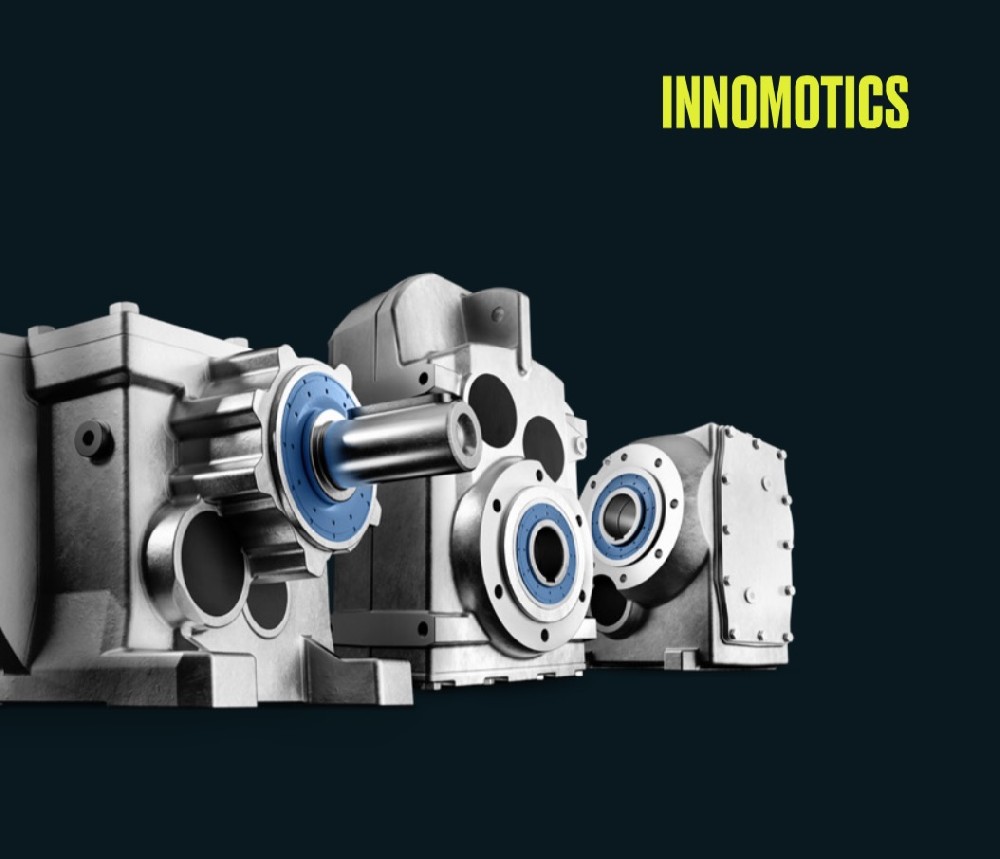
When assessing the health and efficiency of an industrial gearbox, a handful of metrics tell the true story. Vibration analysis remains the most revealing, flagging misalignments, tooth wear, or bearing defects long before a catastrophic failure. Monitoring overall vibration levels according to ISO 10816 standards, alongside spectral analysis to pinpoint specific fault frequencies, gives maintenance teams the early warnings they need.
Temperature is another silent sentinel. Abnormal heat buildup often signals lubrication breakdown or excessive friction, so trending oil sump and bearing temperatures against load conditions is essential. Meanwhile, oil analysis—tracking particle counts, viscosity, and additive depletion—uncovers what the naked eye misses. Together, these indicators form a predictive picture, but their real value emerges when correlated with operational data like torque and speed deviations.
Ultimately, no single KPI stands alone. A gearbox operating quietly but with rising iron content in its oil, or with normal temperatures but escalating vibration at a specific gear mesh frequency, demands a holistic view. By integrating these metrics into a condition-based maintenance strategy, plants can extend asset life and avoid the downtime that ripples across entire production lines.
Material Selection and Manufacturing Precision
Choosing the right material lays the foundation for a product's strength, weight, and resistance to wear or corrosion. Engineers assess factors like tensile strength, thermal expansion, and fatigue limits to match performance requirements, often balancing exotic alloys with cost-efficient alternatives without compromising integrity.
Manufacturing precision then translates those material choices into reality, relying on tight tolerances and advanced machining to eliminate deviations. Processes like multi-axis CNC milling and grinding ensure components fit together seamlessly, while in-line metrology catches microscopic flaws before they become failures.
When meticulous material selection meets exacting fabrication standards, the result is extended service life and consistent reliability under real-world stresses. This harmony between substance and craftsmanship reduces maintenance cycles and prevents premature breakdowns, even in harsh operating environments.
Real-World Reliability: Case Studies Without the Hype
Talk of system uptime and durability often gets buried under glossy marketing claims. But when you step back and watch how things actually perform over months or years, a clearer picture emerges. Real reliability shows up in the small, unremarkable moments: the server that doesn’t need a midnight reboot, the production line that just keeps humming without fanfare. Case studies that capture this avoid celebrating the ordinary, instead drawing attention to the quiet consistency that prevents disasters before anyone can tweet about them.
Consider a mid-sized logistics company that switched to a lesser-known inventory platform. They didn't chase 99.999% uptime guarantees or flashy dashboards. Their test was simpler: let it run through a full holiday season without intervention. The platform handled a 300% spike in orders, a dozen third-party integrations, and a few hardware failures at remote warehouses without a single manual override. The real story here isn't the technology's heroism—it's the absence of firefighting. That's the kind of result worth writing down, not to impress analysts, but to remind ourselves that reliability is most visible when nothing goes wrong.
Service Networks and Spare Parts Availability
A robust service network acts as the backbone of reliable equipment support, ensuring that technical expertise is never far away when you need it most. Instead of relying on a single central hub, successful providers weave a web of regional service centers, mobile response teams, and certified local partners. This distributed model not only cuts down travel time for technicians but also builds familiarity with the specific operating conditions and common issues in each area. The result is faster diagnostics, more personalized guidance, and a sense that real people are invested in keeping your operations running smoothly.
Spare parts availability often separates a minor hiccup from a major disruption. Warehousing strategies have evolved beyond simply stocking shelves; smart inventory systems now use predictive analytics to position critical components closer to where failures are statistically more likely to happen. This means that a replacement pump for a construction machine in a remote mining site or a specialized circuit board for a packaging line can be dispatched within hours rather than days. It’s the difference between a planned maintenance window and an unplanned halt that eats into productivity.
The real magic happens when service networks and parts logistics work in tandem. Field technicians arrive on-site not only with the right tools but also with real-time visibility into inventory levels across the entire network. If a rare component isn’t in their van, they can instantly locate the nearest available unit and arrange immediate courier delivery, often while the repair is still underway. This tight integration eliminates the old frustration of multiple site visits and transforms service from a reactive fix into a streamlined, almost seamless extension of your own team’s capabilities.
Tailoring Gearbox Solutions to Specific Operational Demands
Every production environment brings its own rhythm and constraints. A gearbox that excels in a high-speed packaging line might quickly falter under the constant shock loads of a rock crusher. The real challenge lies not in rating horsepower or torque in isolation, but in grasping the subtle interplay between duty cycles, ambient conditions, and the physics of the driven load. Without this deeper view, even a generously sized gearbox can become a recurring maintenance headache or a bottleneck that stifles throughput.
The design conversation shifts when you treat thermal behavior, lubrication demands, and structural rigidity as variables to be tuned rather than fixed specifications. For example, a conveyor operating in a cold storage facility needs housing materials and oil viscosities that maintain film strength at subzero temperatures, while a stirrer in a chemical plant must handle corrosive vapors and potential washdowns without compromising seals. By mapping the true operating profile to the exact internal architecture—whether through modular gear sets, custom bearing spans, or specialized coatings—the resulting drive package works as an integrated limb of the machine instead of a square peg forced into a round hole.
The most reliable solutions often emerge from reverse engineering the failures of a previous standard unit. Looking at wear patterns on old gears, measuring the actual vibration spectrum, and analyzing lubricant contamination can reveal mismatches that a fresh calculation alone might miss. Armed with that field intelligence, the replacement or new build can incorporate subtle improvements: a slightly coarser tooth pitch to resist debris, an offset cooling fan that doesn't starve for air in dusty surroundings, or an oil-and-grease regimen that matches the specific contaminants likely to sneak past the seals. This approach isn't about building a “better” gearbox in the abstract; it's about building the right gearbox for that singular, demanding application.
FAQ
FLENDER gearboxes are known for their robust design, precision engineering, and proven performance in demanding environments.
Look for a manufacturer with a track record of quality, comprehensive support, and the ability to customize solutions to your specific requirements.
Yes, they are specifically designed to handle high torque and continuous operation, making them ideal for heavy-duty industries like mining and cement.
Consider their experience, product range, after-sales service, and adherence to international standards.
Absolutely, FLENDER offers modular designs and engineering support to tailor gearboxes to your exact specifications.
They are widely used in conveyor systems, mixers, mills, and other equipment in sectors like energy, materials handling, and marine.
Through rigorous testing, high-quality materials, and continuous innovation in gear technology.
Yes, because the long-term reliability and lower maintenance costs often justify the initial investment.
Conclusion
When engineering drives for demanding industrial environments, FLENDER’s philosophy centers on longevity and adaptability—not just meeting specs but anticipating real stress cycles. Their gearboxes integrate case-hardened helical and bevel-helical tooth geometries, ground to micro-level tolerances, which translate vibration data into predictable maintenance windows. Rather than chasing outright torque figures, the focus lands on system efficiency under partial loads, thermal stability, and alignment forgiveness, because failures rarely happen at rated capacity. Material choices reinforce this: high-purity alloy steels with controlled inclusion content, paired with heat treatments that avoid brittle martensite peaks, create a core toughness that withstands shock loads without sacrificing surface hardness. The resulting wear patterns, documented in pulp mill drives and conveyor head stations, show scuffing resistance comparable to laboratory tests but validated over 40,000 operating hours, proving that accelerated aging protocols actually align with field outcomes when metallurgy isn’t compromised.
Reliability further hinges on how quickly localized support can react—hence FLENDER embeds its service footprint into regional hubs, stocking not only complete units but also critical component kits pre-configured for common failure curves. A copper mine in Chile, for instance, switched from a competitor’s parallel-shaft reducer to a FLENDER solution customized with reinforced thrust bearings and a forced lubrication bypass, cutting unplanned downtime by seventy percent across three HPGR circuits. This wasn’t a catalog selection; it required mapping torque reversals from the process, selecting a coupling interface to dampen torsional peaks, and integrating condition-monitoring ports that feed into the plant’s predictive analytics. Without that tailored approach and the manufacturer’s willingness to share bearing life calculations openly, the operational savings would have been diluted by generic oversizing. Ultimately, choosing a gearbox maker means picking a partner who treats each quarry conveyor or cement mill as a unique thermal-and-load puzzle, not a row in a price book.
Contact Us
Contact Person: Jony
Email: [email protected]
Tel/WhatsApp: 086-0571-86161808
Website: https://en.hzcjm.com/