

Shock Absorber Fastener Exporter Sourcing Tips for Reliable Global Supply
2026-11-18
Most sourcing guides treat shock absorber fasteners like a commodity. Then a container arrives with thread pitch variations, inconsistent plating, and no paperwork to trace the heat lot. Reliable global supply starts long before the order is placed. It starts with how an exporter manages tolerances, surface treatment, and logistics under pressure. In this post, we break down the checks that separate consistent suppliers from costly surprises, and we show how XIAYI approaches those details. Keep reading to source with fewer blind spots and fewer warranty headaches.
Look past the listed tensile strength and ask for the test scatter
A tensile strength figure on a supplier sheet rarely tells you how that number was reached. It may be an average, a guaranteed minimum, or the best result from a small batch. Without knowing the scatter behind it, you are comparing single points instead of actual material behavior.
Ask to see the spread across test coupons and production lots. A material that holds a predictable range near 600 MPa is often more useful than one that occasionally peaks at 650 MPa but also drops well below your design assumption. Wide scatter tends to show up later as unexpected failures, rework, or field returns.
When you review test data, look at the minimum values and the standard deviation rather than the headline number. If the scatter is not available or the supplier avoids the question, treat that gap as part of the material risk. The safer choice is usually the option with less drama in its test history, not the one with the highest single reported strength.
Make the exporter prove they can hold a thread tolerance in cold weather
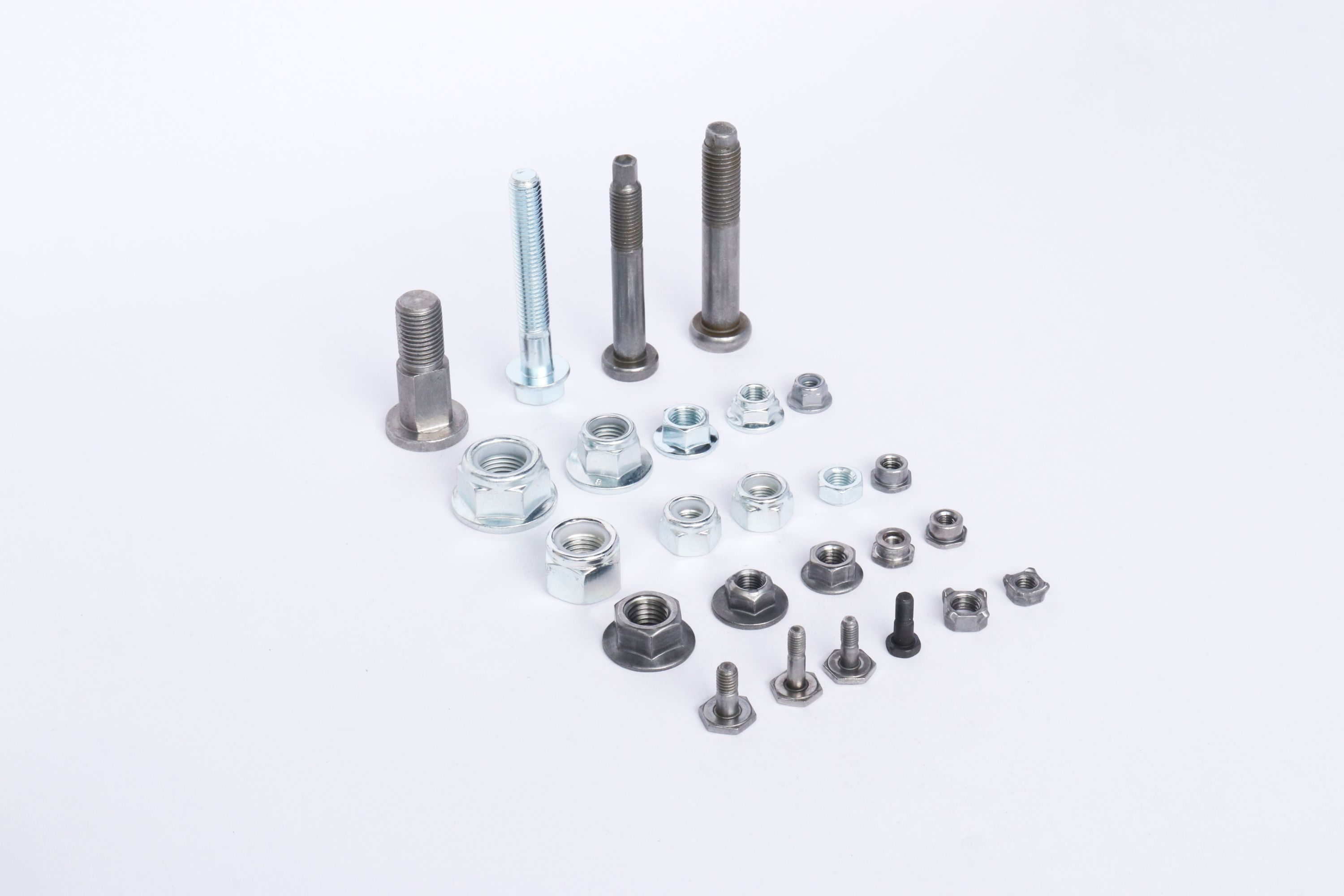
A thread gauged in a warm inspection room tells you almost nothing about fit after the part has sat overnight at minus thirty. The exporter should be able to walk you through a cold soak procedure: assemblies or threaded samples are held at the target low temperature, then measured quickly with the same gauges or CMM setup used on the floor. Ask for data showing pitch diameter change, flank angle distortion, and any ovality in the crests. If they hesitate to put a number on it, treat that as an open risk.
Material choice alone does not settle the question. Two alloys that behave alike in a catalogue can move differently when threads are cut, plated, and then chilled. Require the exporter to compare pre-chill and post-chill measurements across a real batch, not a single sample. A useful report will state the temperature, soak time, measuring method, batch size, and the actual tolerance band that held. If the report only shows room-temperature inspection results, push back until the cold condition is named.
Make the acceptance rule explicit: the thread tolerance must be maintained at the lowest service temperature you specify, measured after the part has reached thermal equilibrium. If the exporter cannot test in-house, they should arrange a local lab or provide a witness test. The point is not to collect a certificate for the file; it is to see whether the process stays in control when cold shrinks the metal and stiffens the plating. That evidence is far more useful than a generic compliance statement.
Why poor dunnage turns a fastener shipment into a rust claim
Fasteners rarely corrode on their own. What usually gets blamed on plating or alloy choice is often decided hours before the container door closes. When threads are packed against wet lumber, unseasoned plywood, or cardboard that has already pulled moisture from humid air, the damage begins while the shipment is still moving through the yard. Wood with a moisture content above nineteen percent acts like a slow-release sponge inside the crate, pushing trapped humidity directly against zinc and steel surfaces day after day.
The real trouble starts when those surfaces are joined under load. A damp block of dunnage pressed against a hex head or a threaded shank creates a microclimate that never fully dries. Condensation cycles with every temperature swing, and the water picks up organic acids from the wood itself. Electroplated fasteners, even with a clean pass through salt spray testing, have little defense against that kind of continuous, localized exposure. Pitting shows up first at the bearing points, then spreads into the threads as the protective layer thins out.
What frustrates buyers most is that the rust pattern tells the whole story. It is never uniform, never random. It follows the shape of the blocking, the position of the bottom layer, the place where the tarp was pulled too tight. A shipment that left the factory bright and dry can arrive with brown streaking exactly where the dunnage touched. By the time the claim is filed, the damage is already documented: fasteners etched into a pattern no coating spec was ever going to overcome.
Lock the finish spec with a pre-production sample before volume pricing
A finish can shift under different light, so approving a physical sample before quoting removes the guesswork from gloss, texture, colour depth, and edge coverage. It gives both sides a clear reference for what “acceptable” actually means. Without that sample, pricing gets built on a verbal description, and verbal descriptions leave too much room for different memories later.
Run the sample on the same line, with the same pre-treatment and coating batch planned for production. Once approved, mark it, photograph it under neutral light, and keep a signed copy with both the factory and the buyer. That turns a subjective finish call into a shared physical standard, which is what keeps the conversation honest.
Locking the finish before volume pricing also prevents the quiet cost of “almost right.” If the sample is not fixed early, a lower quote can turn into a higher one later when the supplier adjusts for extra polishing or a second coating pass. Agree on the sample first, then discuss the numbers.
Find a supplier that treats mixed certifications as routine, not an upsell
Look for a supplier that already treats combinations like CE plus RoHS plus REACH, or organic blended with fair trade, as part of the standard quoting process. If a factory is genuinely familiar with multiple markets, they will ask for the product codes and destination countries, then return a clear document list and timeline. They should not treat each added certification as a special project that needs another round of pricing discussions.
When a supplier starts framing every certificate as an extra service or a custom requirement, that usually signals an internal process that is not fully built out, or an attempt to raise the unit price later. A capable partner already knows how to handle mixed certifications within the same production run, because they have done it often enough to keep the paperwork moving without disrupting lead times.
One practical way to test this is to send a short inquiry with two or three certification combinations at once. Pay attention to whether the reply is a concrete breakdown of documents and dates, or a vague note about complexity and added cost. A supplier that sees this as routine will give you straightforward answers, while one that treats it as a revenue opportunity will hesitate, over-explain, or push the conversation toward premiums before committing to a quote.
The questions that separate export-focused factories from domestic-only shops
Most factory conversations stall at capacity and unit price. The sharper divide appears when a buyer starts asking about revision control on product specs, whether the facility can trace a raw material lot back to a specific supplier within hours, or how often social compliance audits are repeated without a customer prompting them. Export-facing operations tend to answer those questions with documents, names, and dates rather than vague assurances.
Another set of questions is less about paperwork and more about rhythm. How does the shop handle a sudden change in packaging requirements after the line is already set? Can a shift leader explain the rejection criteria for a minor cosmetic defect in the buyer's language? Domestic-only workshops often see these as interruptions, while export-focused teams treat them as part of the order itself. The difference shows up long before the shipment leaves the dock.
There is also the question nobody prints on a supplier form: what happens when the auditor walks in unannounced on a Friday afternoon. The answer reveals whether quality and compliance are daily habits or staged performances. Factories that live by their systems rarely scramble; those that scramble have already answered the real question.
FAQ
Look for direct manufacturing involvement rather than an office that simply forwards inquiries. A dependable exporter usually shares process control details, can arrange a live walkthrough of the production floor, understands heat treatment and metallurgy, and keeps dimensional inspection records for each batch. If they hesitate to show production or testing data, that is a clear warning sign.
Confirm thread pitch, under-head radius, surface treatment, hardness range, tensile strength, and salt spray hours if corrosion resistance matters. Also ask for the raw material certificate and whether the fastener matches a specific OEM drawing or a recognized standard such as ISO 898-1 or DIN.
Request recent shipment records and customer references, ask for a video tour of the production line and testing room, and order a small pre-production sample run. Pay attention to how the supplier communicates: a reliable partner asks about application, torque requirements, and failure modes instead of pushing whatever is already in stock.
The most common problems are inconsistent thread tolerance, a weak under-head area caused by poor cold forging, hydrogen embrittlement after plating, and mixed steel grades within the same lot. These can cause assembly line stoppages or field failures, so lot-level traceability should be a standard requirement.
Plan around blanking, threading, heat treatment, surface treatment, and final inspection rather than assuming the exporter has ready stock. Agree on incoterms, packaging that protects threads during transit, and a clear inspection window before shipment. Sharing a monthly forecast helps the exporter reserve capacity and avoids last-minute expediting.
If the application differs from common sizes, custom hardware usually pays off because the fastener must match the damper's mounting geometry and load path. Standard parts can work for prototypes, but high-volume buyers often find that a tailored under-head shape or thread length reduces assembly problems and long-term warranty risk.
Start with a small trial order and use a payment method that offers recourse if the supplier does not ship, such as a letter of credit or escrow depending on the region. The contract should define acceptance criteria, allowable defect rate, and how nonconforming lots are returned or replaced, so disputes do not become open-ended.
Conclusion
Sourcing shock absorber fasteners across borders rarely fails on a single recorded value; it fails in the gap between a certificate and what lands at the receiving dock. A listed tensile strength says very little unless you also request the scatter across one production lot, since wide dispersion points to uneven heat treatment and inconsistent raw material far more than any average does. The same logic applies to thread tolerance. An exporter that cannot prove stable fit at low temperatures will eventually leave you with assembly line rejects after parts have sat in cold storage or moved through winter ports. Ask for test data covering the upper and lower limits, not just a neatly passing report.
Packaging and finish control matter just as much as metallurgy. Poor dunnage lets moisture sit between layers, so a fastener shipment can become a rust claim before it clears customs. Lock the finish specification with a pre-production sample before volume pricing, because this prevents a quiet change to a cheaper coating once the order is placed. Also watch how the supplier handles mixed certifications. If they treat them as routine paperwork rather than an upsell, export documentation is probably built into their process. A few pointed questions about labeling, consolidation, and Incoterm fluency usually separate export-focused factories from domestic-only shops. If those answers sound vague, the lower quote is probably not lower after rework, delays, and rejected lots.
Contact Us
Contact Person: Leela
Email: [email protected]
Tel/WhatsApp: 8613586885132
Website: https://www.xiayishockparts.com