

Top Enterprise Drone Simulator: The Ultimate Guide to Virtual UAV Training
2026-08-10
As drones reshape industries, enterprise-grade simulation is no longer a luxury—it’s a strategic necessity. From risk-free pilot training to mission rehearsal in hyper-realistic virtual environments, the right simulator can redefine operational readiness and safety. In this guide, we explore what makes a top-tier enterprise drone simulator and how SRIZFLY is setting new standards for virtual UAV training, helping teams master complex scenarios without ever leaving the ground.
Beyond Basic Flight Mechanics: Advanced Sensor Simulation
Moving past elementary flight dynamics means tackling sensor behavior in edge-case environments. We simulate not just ideal readings but also noise profiles, signal degradation, and intermittent failures that occur during high‐G maneuvers or low‐visibility conditions. By modeling gyroscope drift under vibration and pitot‐tube icing in supercooled clouds, the framework replicates data streams that a real flight controller would struggle to interpret.
The simulation fuses multi‑sensor inputs the way an actual IMU would, using realistic latency and update rates. Rather than assuming perfect synchronization, we introduce jitter and timestamp misalignments between GPS, magnetometer, and barometric altimeter. This forces navigation algorithms to handle contradictory clues—exactly the sort of messy input that separates robust controllers from those that only work in textbook conditions.
Advanced sensor modeling also accounts for terrain interference and urban canyon effects. Radar altimeters are simulated with multipath reflections over water, while lidar returns are degraded by dust or fog. The goal is to create a testbed so faithful to real‐world distortions that an autopilot validated here can confidently transition from simulation to flight without expensive retuning.
From Novice to Expert: Progressive Training Modules That Adapt
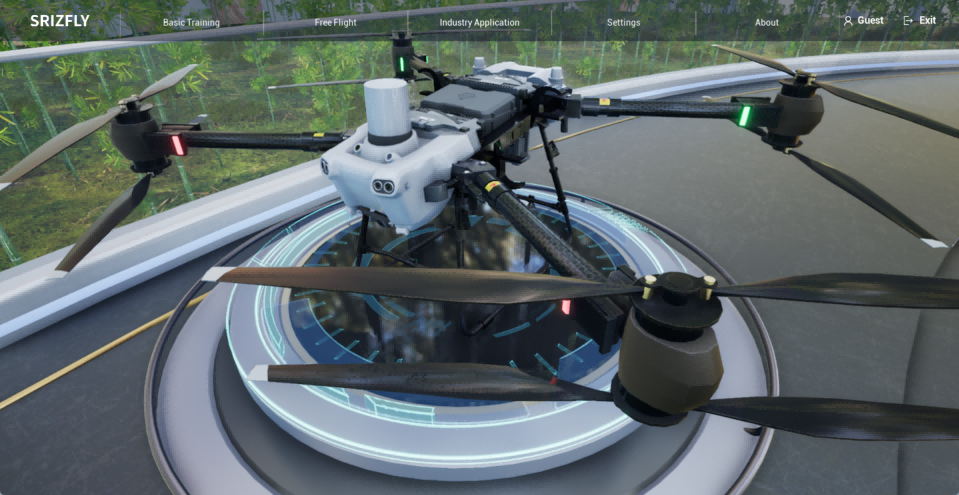
Learning journeys rarely follow a straight line. A newcomer needs foundational concepts explained with patience and simplicity, while someone with years of experience might zone out at the same slow pace. That’s where progressive training modules come into their own — they meet learners exactly where they are and adjust as their skills grow. Instead of forcing everyone through the same rigid curriculum, these modules layer content in stages, unlocking more advanced material only when a solid grasp of the basics has been demonstrated. It feels less like a one-size-fits-all lecture and more like a personal coach who knows when to push and when to pause.
What makes this approach truly effective is the subtle feedback loop baked into the design. Quizzes, interactive tasks, and real-world scenarios aren’t just tacked on at the end — they’re woven throughout to gauge understanding in the moment. The system might notice that you’re breezing through certain topics and quietly accelerate your path, or it might detect hesitation and serve up extra practice without making you feel stuck. This quiet adaptability keeps frustration low and motivation high, because you’re never overwhelmed by leaps in difficulty nor bored by repetition you don’t need.
Over time, the transition from novice to expert feels organic rather than forced. Learners build genuine confidence as they climb, often surprised at how naturally complex skills become second nature. The best part? This isn’t about gaming a ranking or rushing to a finish line. It’s a steady, respectful process that honors individual pace and prior knowledge, leaving people not just trained but truly capable, ready to apply what they’ve learned in unpredictable, real-world settings.
Virtual Reality Integration for Immersive Training Scenarios
Merging virtual reality into training programs isn't just about adding a tech layer—it's about reshaping how people absorb and apply complex skills. Instead of static manuals or passive videos, learners step into dynamic environments where mistakes carry no real-world cost. A surgeon can repeat a delicate procedure dozens of times, each iteration subtly varied to mimic the unpredictability of an actual operating table. This kind of hands-on repetition, guided by real-time feedback, builds a depth of muscle memory and decision-making speed that traditional methods rarely touch.
What often gets overlooked is how VR dismantles the usual barriers of location and access. A team spread across continents can enter the same simulated factory floor, collaboratively troubleshooting a cascading equipment failure as if they were shoulder to shoulder. The data captured during these sessions—eye movement, hesitation patterns, even subtle posture shifts—offers instructors a window into a trainee's thought process, enabling coaching that's precisely tailored rather than one-size-fits-all. It's this blend of immersive presence and analytics that turns a training module into a living, evolving curriculum.
Beyond the obvious fields like aviation or medicine, creative industries are finding unexpected value. Architects walk clients through unbuilt spaces, adjusting light and materials on the fly to align on a vision before a single brick is laid. Emergency response teams rehearse crisis protocols with variables that shift each run—a blocked exit here, a simulated chemical hazard there—ensuring that adaptability becomes instinct. The real breakthrough isn't the realism of the visuals, but how the experience rewires a person's readiness to perform when it actually counts.
Customization Options for Enterprise-Specific Needs
When off-the-shelf solutions fall short, our platform adapts to how your teams actually work. We delve into your existing workflows, compliance requirements, and industry quirks before suggesting any changes. This means you aren't forced into a rigid mold—instead, the system bends to accommodate your approval chains, data hierarchies, and reporting preferences. From custom fields and dynamic dashboards to role-based views that mirror your organizational structure, every tweak is designed to reduce friction rather than add another layer of complexity.
We don’t believe in a one-size-fits-all approach, so we’ve built a modular backend that lets you switch features on or off without interfering with core stability. Need client-specific portals that display only certain asset categories? Want automated escalations that follow your territory rules rather than a generic timer? We handle these edge cases natively. Our technical team collaborates with your ops staff during onboarding to map out bespoke logic—and because these adjustments live at the configuration level, updates won’t break your unique setup.
Security and governance are never an afterthought. We integrate with your identity provider, support granular permissions down to the field level, and let you define retention policies that align with regional legislation. If your industry demands audit trails that capture “who changed what and why,” we build that in from day one. The goal is a partnership where the technology shapes itself around your strategy—giving you a competitive edge without the headache of maintaining custom code.
Measuring Proficiency: Metrics That Matter in Pilot Assessment
Gauging a pilot's true capability goes far beyond logging flight hours. While experience is foundational, modern assessment frameworks dig into specific, measurable competencies that predict performance under pressure. These metrics are crafted to reflect how a pilot integrates technical knowledge, situational awareness, and decision-making in real-time scenarios. Instead of relying on a single score, evaluators now look at a constellation of indicators—from manual handling precision to communication clarity—each offering a distinct window into a pilot's readiness.
One of the most telling metrics is the pilot's ability to manage unexpected events without compromising safety. This involves tracking response times, diagnosis accuracy, and the effectiveness of corrective actions during simulated emergencies. Another critical dimension is cognitive load management: how well does the pilot prioritize tasks when demands spike? Data from eye-tracking and workload assessments helps quantify this, revealing patterns that subjective checklists often miss. These insights allow training to be tailored, focusing on the specific mental models and habits that separate competent aviators from exceptional ones.
Proficiency also hinges on interpersonal skills, which are notoriously hard to measure. Metrics here include cross-crew coordination scores and the clarity of radio transmissions under duress. Increasingly, operators are using peer feedback and debriefing analytics to build a richer picture of a pilot's collaborative strengths. By triangulating technical data with human factor variables, organizations can identify not just who meets the standard, but who consistently elevates the entire crew's performance. That deeper understanding is what transforms assessment from a box-checking exercise into a genuine driver of aviation excellence.
FAQ
An enterprise drone simulator is a professional-grade software platform that replicates real-world UAV flight conditions for training, testing, and mission planning. Unlike basic simulators aimed at hobbyists, these versions incorporate high-fidelity physics, realistic environmental variables, and fleet management tools. They often support custom scenarios, hardware-in-the-loop integration, and detailed analytics that organizations need to train pilots at scale while meeting regulatory standards.
Bringing simulators into a corporate training program slashes the risk of costly crashes during the learning phase, especially when dealing with pricey industrial drones. It also allows teams to practice dangerous maneuvers or emergency procedures safely, log training hours regardless of weather, and streamline the path to certification. For companies operating in sensitive environments, simulators offer a controlled space to build muscle memory without putting assets or people in harm’s way.
Prioritize accurate flight dynamics that mimic your specific drone models, plus adjustable wind, turbulence, and sensor feedback. Multi-user capability is essential for team-based exercises, and integration with real ground control software keeps the transition seamless. Look for an SDK or API that lets you build custom modules, scenario randomization to avoid predictability, and robust performance tracking that ties into your existing learning management system.
The gap keeps narrowing. Modern enterprise simulators run on advanced physics engines that factor in air density, motor lag, and even battery drain curves. They can import digital twin models of real worksites so pilots train in the exact environment they’ll operate in. While you won’t feel the wind on your skin, the control latency, visual fidelity, and system behavior often mirror the real drone closely enough that pilots report a nearly seamless shift from simulation to live flight.
Absolutely. Repair bills from crashes, insurance premiums, and downtime all drop when pilots log more hours in a risk-free setting. You can stress-test equipment configurations and flight plans before committing hardware, which avoids field failures. Some platforms even run what-if scenarios for battery endurance and payload limits, catching planning errors early. Over a fiscal year, the savings easily justify the simulator investment, especially for large fleets.
Energy, construction, public safety, and agriculture lead the charge. Utility inspectors can rehearse pylon surveys without line-of-sight risks, while first responders run search-and-rescue patterns in variable light conditions. Mining and logistics firms use them to plan complex autonomous missions and train remote operators in a unified way. Any sector where downtime or data errors carry heavy consequences finds value in pre-flighting operations virtually.
Start by listing your primary use cases—whether it’s basic stick time, advanced sensor operator training, or enterprise-wide certification tracking. Ask vendors for trial access with your own drone profiles and a sample of your real terrains. Check if the platform connects to your existing ground control station and flight log systems. Also consider the learning curve for instructors: a powerful tool that nobody can configure easily won’t get adopted. Finally, weigh licensing models against team size and expected growth to avoid budget surprises later.
Conclusion
A top-tier enterprise drone simulator goes far beyond basic stick-and-rudder practice, recreating the full sensory experience of real UAV missions. Advanced sensor simulation brings thermal, LiDAR, and multispectral feeds to life, teaching pilots to interpret complex environmental data before they ever touch a physical drone. This capability integrates seamlessly with progressive training modules that adapt to each learner's pace—turning a complete novice into a mission-ready operator through dynamic lessons that adjust difficulty and introduce new challenges only when the trainee is truly prepared.
Virtual reality integration then amplifies immersion, placing users in lifelike, three-dimensional spaces where spatial awareness and split-second decisions become muscle memory. For enterprises, deep customization allows every element—airframe, payload, weather, even equipment failures—to reflect specific operational realities, from power-line inspections to precision agriculture. The true measure of success, however, lies in meaningful proficiency metrics: emergency response accuracy, mission completion under pressure, and risk-mitigation behaviors. By tracking these rather than mere flight hours, organizations gain a clear, trustworthy view of pilot readiness, enabling confident certifications and safer skies.
Contact Us
Contact Person: Niles Liu
Email: [email protected]
Tel/WhatsApp: 8619945009803
Website: https://srizfly.com/